




A dry cough is a type of cough that occurs without the production of mucus or phlegm. Instead of clearing the airways, it creates a persistent irritation that can feel uncomfortable and exhausting over time. While it may begin as a mild throat tickle, a dry cough can quickly become disruptive, especially when it lingers or worsens at night.
Unlike productive coughs that help remove congestion, a dry cough does not serve a clearing function. It is often triggered by inflammation or irritation in the throat or airways, with common causes including viral infections, allergies, asthma, acid reflux, and environmental irritants such as smoke or pollution. Although many cases resolve within a short period, a dry cough that persists or intensifies may indicate an underlying condition, and if severe, seeking prompt evaluation at an ER in Pearland can ensure proper diagnosis and treatment.
How Does a Dry Cough Feel
A dry cough is often described as an irritating, tickling sensation deep in the throat. It may feel like something is constantly triggering the urge to cough, even when there is nothing to clear. This persistent irritation can make it difficult to speak for long periods or take deep breaths comfortably.
Many people experience a scratchy or burning sensation in the throat, especially after repeated coughing. The cough itself can feel forceful yet unproductive, leaving the throat sore without providing relief. In some cases, it may also create a tight feeling in the chest, particularly after frequent coughing episodes. The discomfort can become more noticeable at night or in quiet environments, where even mild coughing feels amplified, and over time, this constant irritation can lead to fatigue, frustration, and interrupted sleep.
Difference Between Dry Cough and Wet Cough
Distinguishing between dry and wet coughs is essential for understanding their causes and choosing the right treatment approach.
- Dry Cough: Non-productive and does not produce mucus. It is usually associated with irritation, inflammation, or conditions like allergies and asthma. It often feels scratchy, may worsen at night, and can be triggered by cold air, dust, or other irritants.
- Wet Cough: Productive and involves the expulsion of mucus or phlegm. This type of cough helps clear the respiratory tract and is commonly linked to infections like bronchitis or pneumonia, often sounding deeper and more congested.
A dry cough is non-productive and does not produce mucus. It is usually associated with irritation, inflammation, or conditions like allergies and asthma. It tends to feel scratchy and may worsen at night or in response to triggers such as cold air or dust.
In contrast, a wet cough is productive and involves the expulsion of mucus or phlegm. This type of cough helps clear the respiratory tract and is commonly linked to infections like bronchitis or pneumonia. Wet coughs often sound deeper and more congested compared to the sharp, hollow sound of a dry cough.
Dry Cough Symptoms That Mustn’t Be Ignored
While a dry cough may seem harmless at first, certain symptoms can indicate a more serious issue and should not be overlooked.
- Persistent throat irritation: A constant tickling or scratchy feeling that triggers repeated coughing.
- Frequent coughing episodes: Occurring throughout the day or worsening at night, disrupting sleep.
- Sore or inflamed throat: Caused by repeated strain from coughing.
- Chest tightness or discomfort: Resulting from ongoing coughing effort.
- Voice changes or hoarseness: Prolonged irritation may affect the vocal cords.
- Shortness of breath or wheezing: Could suggest asthma or other respiratory conditions.
- Cough lasting more than three weeks: May indicate a chronic or underlying issue.
- Unexplained fatigue or weakness: Often due to poor sleep and prolonged coughing.
Recognizing these symptoms early can help prevent complications and ensure that appropriate treatment is started on time, and if symptoms become severe, searching for an emergency room near me can provide quick medical evaluation and care.
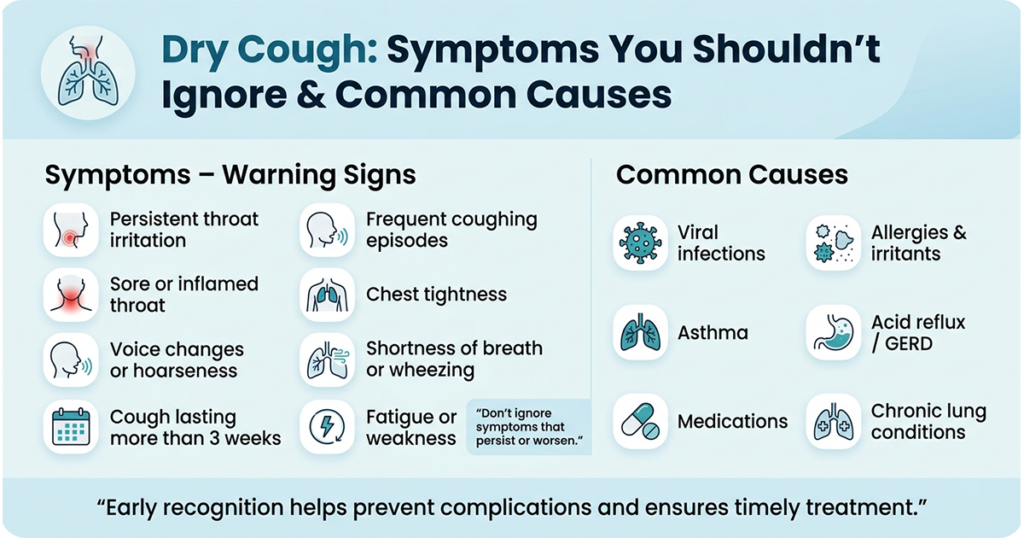
What Causes a Dry Cough
A dry cough can be triggered by a variety of factors, ranging from temporary irritations to chronic medical conditions. Common causes include:
- Viral infections: Illnesses like the common cold or flu can lead to airway inflammation, causing a lingering dry cough even after other symptoms improve. This is often referred to as a post-viral cough.
- Allergies and environmental irritants: Exposure to pollen, dust, mold, pet dander, smoke, pollution, or strong odors can irritate the throat and airways, triggering persistent coughing.
- Asthma: Cough-variant asthma may present primarily as a dry cough, often worsening at night or during physical activity. Cold air and allergens can also trigger symptoms.
- Acid reflux (GERD): When stomach acid flows back into the esophagus, it irritates the throat and leads to coughing, especially after meals or while lying down.
- Medications: Certain drugs, particularly ACE inhibitors used for high blood pressure, can cause a persistent dry cough as a side effect. This usually improves once the medication is adjusted under medical supervision.
- Chronic lung conditions or infections: In more serious cases, conditions such as chronic bronchitis, interstitial lung disease, or respiratory infections may cause a dry cough and require medical evaluation.
Understanding these causes highlights the importance of identifying triggers early to ensure effective treatment and prevent the cough from becoming persistent or severe.
When a Cough Can Be Fatal
Although rare, a cough can sometimes signal life-threatening conditions if severe or persistent. A dry cough that doesn’t improve, especially with alarming signs, should never be ignored. Severe chest pain, difficulty breathing, or coughing up blood may indicate serious respiratory or cardiovascular issues like pneumonia, pulmonary embolism, or advanced lung disease.
Other warning signs include high fever, night sweats, unexplained weight loss, or extreme fatigue. Recognizing these early is crucial, as timely diagnosis and treatment can prevent complications and reduce health risks. Ignoring such symptoms can delay care and worsen outcomes.
How to Get Rid of a Dry Cough?
Managing a dry cough effectively involves a combination of home remedies, over-the-counter solutions, and medical treatments, depending on the underlying cause.
- Home Remedies: Staying hydrated by drinking plenty of water helps keep the throat moist and reduces irritation. Warm drinks like herbal teas or broths can soothe the throat and provide comfort. Honey naturally calms the throat and reduces coughing frequency, especially before bedtime, while steam inhalation or using a humidifier adds moisture to the airways and eases dryness.
- Over-the-Counter Medications: Cough suppressants can reduce the urge to cough and help manage persistent coughing. Throat lozenges or sprays provide temporary relief by soothing throat irritation and calming discomfort, making daily activities and sleep easier.
- Medical Treatments: For asthma-related coughs, inhalers or anti-inflammatory medications may be prescribed. GERD-related coughs can be managed with dietary adjustments and medications that reduce acid production. Allergy-induced coughs often respond well to antihistamines or nasal sprays, addressing the root cause for long-term relief.
A targeted approach that addresses the underlying cause ensures more effective relief and helps prevent the dry cough from returning.
How Long Does a Dry Cough Last?
The duration of a dry cough depends largely on its cause. In many cases, a cough linked to a viral infection lasts between one and three weeks. However, post-viral coughs can linger for several weeks due to ongoing irritation in the airways, even after other symptoms have resolved.
Chronic conditions such as asthma, GERD, or allergies can cause a dry cough that persists for months if not properly managed. Environmental factors and repeated exposure to irritants can also prolong symptoms. A cough lasting longer than three weeks is generally considered persistent and should be evaluated by a healthcare professional to identify the underlying cause and prevent long-term complications.
When to Go to the ERfor Dry Cough
Immediate medical attention is necessary if severe or worsening symptoms accompany a dry cough:
- Difficulty breathing or gasping for air: Indicates a serious respiratory emergency.
- Chest pain spreading to the arm or jaw: Could signal a heart-related condition.
- Severe, uncontrollable coughing fits: That interfere with breathing or daily function.
- High fever, confusion, or bluish lips: Signs of infection or low oxygen levels.
- Sudden worsening in those with chronic conditions: Such as asthma or heart disease.
Seeking care at the right time ensures prompt diagnosis, appropriate treatment, and prevention of serious complications.
Emergency Care for Dry Cough Relief
Struggling with a persistent dry cough can be exhausting and worrisome. At Texas Emergency Care Center, our team provides attentive, expert care, focusing on identifying the root cause and offering targeted treatment to help you find relief. With the right support, you can breathe easier and regain comfort in your daily life.
If your cough worsens or affects your breathing, seeking timely evaluation is crucial. Our compassionate professionals are here to assess your symptoms promptly, provide immediate care, and guide you safely through the recovery process. You don’t have to endure discomfort alone; we’re here to help.
Key Takeaways
- A dry cough is a non-productive cough that causes throat irritation without mucus.
- Infections, allergies, asthma, GERD, or environmental irritants can trigger it.
- Symptoms like persistent coughing, chest discomfort, and shortness of breath should not be ignored.
- Treatment includes home remedies, medications, and addressing underlying conditions.
- Seek medical attention if symptoms persist or worsen.
Frequently Asked Questions
How to stop a dry cough
Stopping a dry cough depends on its cause. Home remedies like warm fluids, honey, steam inhalation, and throat lozenges can provide relief. Over-the-counter suppressants or medical treatment may be needed if the cough persists.
How to avoid a dry cough at night
A dry cough often worsens at night due to lying down or post-nasal drip. Elevating the head, using a humidifier, and avoiding irritants like smoke or dust can reduce nighttime coughing. Managing allergies or acid reflux also helps prevent nocturnal flare-ups.
How long does a dry cough last
The duration of a dry cough varies with its cause. Acute coughs from viral infections usually resolve within 1–3 weeks, while chronic coughs from conditions like asthma, GERD, or allergies may persist for months. Persistent or worsening coughs should be evaluated by a doctor.