


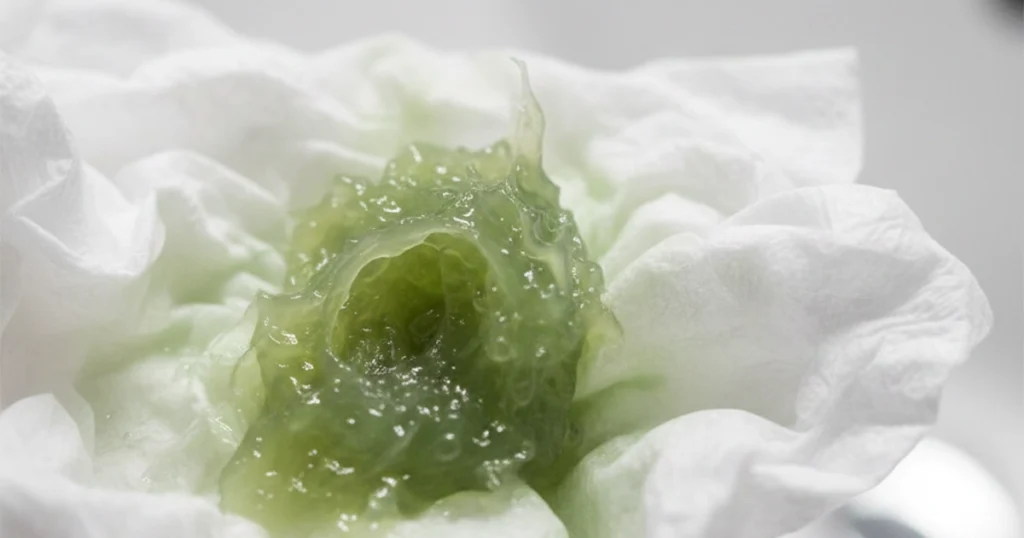
You may have heard that green mucus, snot, or boogers automatically mean you have an infection. In reality, the color of your mucus isn’t a reliable way to determine whether you’re sick. Many factors, including viral and bacterial infections, allergies, or environmental irritants, can change the color and thickness of your mucus.
Understanding the cause of your symptoms is especially important in cases of an upper respiratory infection. The underlying cause determines the best treatment. For example, antibiotics are effective only against bacterial infections, and taking them for a viral illness can slow recovery and create unnecessary complications.
What Does Green Mucus Mean?
Green mucus is a sign that your body is actively responding to irritants or pathogens. The green color comes from white blood cells (neutrophils) and their enzymes. While it can indicate a viral or bacterial infection, green mucus alone does not always mean there’s a serious problem. In one study, 58.9% of green or yellow mucus samples tested positive for bacteria, demonstrating that the color can be a helpful clue but not a definitive diagnosis.
Symptoms of Green Mucus
- Thick, green discharge from the nose or throat.
- Coughing with greenish phlegm.
- Post-nasal drip with green or dark green mucus.
- Congestion accompanied by coloured mucus.
- Feeling of heaviness or fullness in the sinuses due to mucus buildup.
Does Green Snot Mean Infection?
No, green mucus doesn’t necessarily mean that you have an infection. Green snot is the same as green mucus and can appear with viral or bacterial infections, but it can also occur without any infection. The color alone cannot confirm the cause, so it’s important to consider other symptoms and how long they last.
Infections Linked to Green Mucus
- Viral Infection: Viruses like the cold or flu can trigger green mucus as the immune system responds. Most viral infections resolve on their own without antibiotics.
- Bacterial Infection: Bacterial infections such as sinusitis or bronchitis may produce dark green phlegm that persists longer and may require antibiotics. High fever or facial pain often helps differentiate it from viral causes.
- Allergies or Irritants: Allergens or irritants like pollen, dust, or smoke can cause greenish mucus without an infection. Symptoms may include sneezing, itchy eyes, or watery nasal discharge.
- Environmental Irritation: Pollutants, dust, or chemicals can lead to green mucus as your body expels irritants. This usually improves once the exposure stops.
Symptoms of Infection Caused by Green Mucus
When green mucus is part of an infection, other signs usually appear alongside it, indicating the severity.
- Fever And Chills: Sustained fever shows a systemic immune response, commonly seen in bacterial infections.
- Facial Pain Or Sinus Pressure: Severe pressure is typical in bacterial sinus infections.
- Persistent Cough With Green Phlegm: A cough producing dark green mucus for several days may indicate bronchitis or pneumonia.
- Shortness Of Breath Or Wheezing: Lower respiratory involvement warrants urgent medical attention.
When Green Mucus Is Not a Cause for Concern
Green mucus may also reflect a mild immune response or minor irritation. Symptoms are usually mild, improve within a week, and often do not require medical treatment.
- No high fever or chills.
- Clear improvement within a few days.
- No severe sinus pain or difficulty breathing.
- Improvement with rest and hydration.
When to See a Doctor?
Seek medical care if green mucus persists, worsens, or is accompanied by severe symptoms. Early evaluation ensures timely treatment if an infection is present. Warning signs include:
- Symptoms lasting more than 10 days without improvement.
- High fever or recurrent fever.
- Severe facial pain or pressure.
- Trouble breathing or chest pain.
- Green and yellow snot accompanied by body aches or extreme fatigue.
If you experience any of these signs, contact the Texas Emergency Care Center or your nearest urgent care provider immediately.
Treatments for Green Mucus
Treatment focuses on addressing the cause and relieving symptoms. Mild cases often improve with home care, while bacterial infections may require medical intervention.
- Hydration And Rest: Drinking fluids and resting help thin mucus and support immune function.
- Saline Nasal Irrigation: Clears thick mucus and reduces nasal congestion.
- Steam Inhalation: Loosens mucus in the nasal passages and throat.
- Over-The-Counter Expectorants: Medications like guaifenesin help thin and mobilize phlegm.
- Antibiotics (If Prescribed): Necessary for confirmed bacterial infections.
- Decongestants And Antihistamines: Reduce mucus production from allergies or sinus congestion.
- Humidifiers: Adding moisture eases dryness and helps mucus flow.
- Medical Evaluation And Culture Tests: In persistent cases, cultures identify pathogens for targeted treatment.
Get Expert Help for Green Mucus at Texas Emergency Care Center
Are you wondering, “Does green mucus mean infection?” Persistent or worsening green mucus can signal bacterial or viral infections, allergies, or other underlying respiratory issues. At Texas Emergency Care Center, our medical team evaluates your symptoms thoroughly, identifies potential causes, and provides personalized care to manage green mucus safely and effectively.
Whether it’s thick green phlegm, dark green mucus, or green discharge with coughing, Texas Emergency Care Center offers timely assessment and treatment. With professional intervention, you can relieve discomfort, protect your airways, and prevent complications, ensuring your respiratory system stays healthy and your recovery is smooth.