



Abdominal pain is a symptom experienced by many at some point in life. It can appear suddenly or develop gradually, ranging from mild discomfort to severe cramps. Understanding the potential reasons behind abdominal pain is essential for managing it safely and effectively.
This guide provides clear, medically accurate information to help you identify triggers, recognize symptoms, and explore treatment options. Whether it’s occasional stomach spasms or persistent aches, these insights can help you take informed steps toward relief.
What Does Abdominal Mean?
The term abdominal refers to the region between the chest and pelvis, which houses vital organs such as the stomach, intestines, liver, pancreas, kidneys, and reproductive organs. Pain here can come from muscles, skin, or organs and may radiate elsewhere. Abdominal pain is a very common complaint, accounting for approximately 7% to 10% of all emergency department visits in the United States.
Abdominal Pain Symptoms
- Cramping, aching, or sharp pain anywhere in the abdomen.
- Bloating or a feeling of fullness.
- Nausea or vomiting.
- Changes in bowel habits, such as diarrhea or constipation.
- Pain that worsens after eating or with movement.
- Pain radiating to the back or pelvis.
- Gas-related chest pain.
Types of Abdominal Pain
Abdominal pain is often described based on its location relative to the belly button and the body’s midline:
- Upper Abdominal Pain: Above the belly button; may involve the stomach, liver, pancreas, or gallbladder.
- Lower Abdominal Pain: Below the belly button; may involve intestines, reproductive organs, or urinary structures.
- Right-Side Pain: Pain on the right side of the abdomen; may indicate liver, gallbladder, appendix, or kidney issues.
- Left-Side Pain: Pain on the left side of the abdomen; may involve the large intestine, spleen, or reproductive organs.
Possible Causes
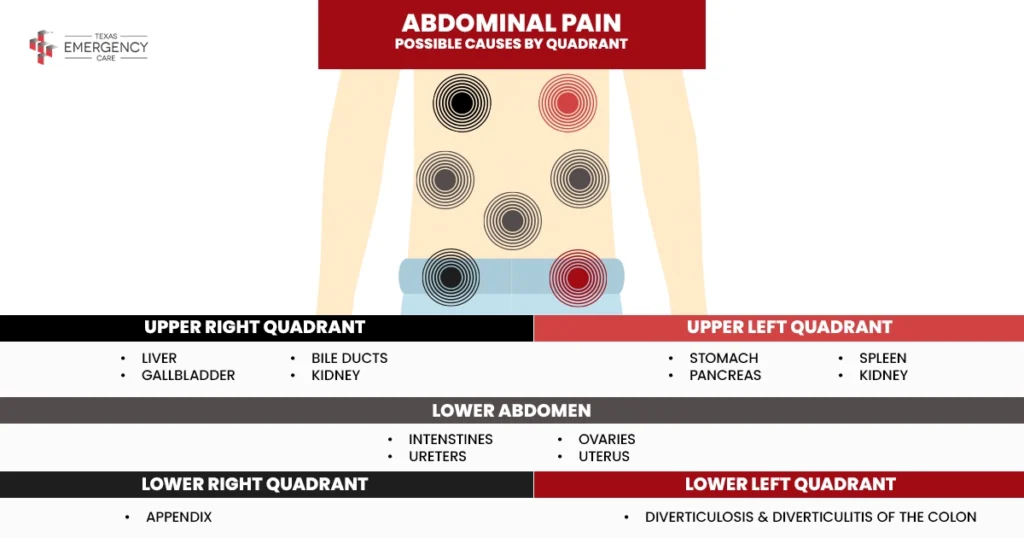
Abdominal pain can result from digestive disturbances, infections, muscle strain, or organ-related conditions. Its location, severity, and associated symptoms often provide clues about the underlying cause. Healthcare providers use this information, along with diagnostic tests, to recommend appropriate treatment.
Read More About: Can Dehydration Cause Abdominal Pain?
Why Does My Stomach Hurt?
Pain in the abdomen may stem from digestive issues, organ inflammation, infection, or muscular strain. It can originate from internal organs, the abdominal wall, or nearby structures. Pain severity doesn’t always match seriousness; some minor issues can feel intense, while serious conditions may seem mild. Your provider will ask questions to find the cause.
Upper Right Quadrant (RUQ)
The upper right quadrant contains the liver, gallbladder, bile duct, and right kidney. Pain here may be sharp, aching, or crampy and can radiate to the back or shoulder. Discomfort in this area often points to digestive or organ-related issues and may require prompt medical attention. Symptoms in this region may also include jaundice, changes in urine color, or digestive disturbances.
Common Causes:
- Liver: Conditions such as hepatitis or congestion may cause dull aching, tenderness, fatigue, or jaundice.
- Gallbladder: Gallstones or inflammation can block bile flow, causing sudden pain that may radiate to the shoulder or back, sometimes accompanied by nausea.
- Bile Duct: Obstruction or infection can result in sharp, persistent pain, digestive upset, and dark urine.
- Kidney (Right Side): Kidney infections or stones may cause flank pain radiating to the lower abdomen, often with urinary symptoms.
Upper Left Quadrant (ULQ)
This area contains the stomach, pancreas, spleen, and left kidney. Pain here may be dull, burning, or crampy, sometimes radiating to the back. Discomfort can indicate digestive or organ-related problems and occasionally signals serious conditions. Nausea, early satiety, or bloating can help pinpoint organ-related causes.
Common Causes:
- Stomach: Gastritis or ulcers may cause burning or gnawing pain, often worsened by spicy or acidic foods.
- Pancreas: Inflammation (pancreatitis) can produce severe pain radiating to the back, along with nausea or vomiting.
- Spleen: Enlargement or injury may create pressure or aching in the upper left quadrant.
- Kidney (Left Side): Stones or infections can lead to flank or abdominal pain, sometimes with urinary changes.
Lower Abdomen
The lower abdomen includes the intestines, ureters, uterus, and ovaries. Pain here can be dull, crampy, or intermittent and may be associated with digestive, urinary, or reproductive issues. Symptoms often worsen with bowel movements, urination, or menstruation. Changes in bowel habits, urinary discomfort, or menstrual irregularities can indicate underlying issues.
Common Causes:
- Intestine: Conditions like IBS, constipation, or infection can cause cramping, bloating, and discomfort.
- Ureters: Kidney stones passing through the ureters may cause sharp, crampy pain radiating to the back.
- Uterus: In women, menstrual cramps, fibroids, or other uterine conditions can trigger lower abdominal pain.
- Ovaries: Ovarian cysts or ovulation may produce dull or intermittent pain.
Lower Right Quadrant (LRQ)
The lower right quadrant contains the appendix and parts of the small intestine. Pain here often starts near the belly button and localizes to the LRQ, sometimes suddenly. Early recognition is critical as some conditions, like appendicitis, require immediate care. Fever, appetite loss, or mild nausea can help identify appendicitis.
Common Causes:
- Appendix: Inflammation (appendicitis) causes sharp, escalating pain, often with nausea, vomiting, or fever.
Lower Left Quadrant (LLQ)
This quadrant primarily involves the colon and is commonly affected by diverticulosis. Pain is often dull, crampy, or intermittent and may be accompanied by bloating, constipation, or changes in bowel habits. In some cases, abdominal tenderness or mild bleeding may indicate inflammation or complications requiring timely medical attention.
Common Causes:
- Diverticulosis: Small pouches in the colon can become inflamed or infected, leading to localized LLQ pain.
- Diverticulitis of the Colon: Inflamed diverticula may produce more severe pain, fever, and digestive disturbances requiring medical attention.
How Abdominal Pain Is Diagnosed?
Determining the cause of abdominal pain starts with a thorough evaluation. Your healthcare provider uses a combination of physical examination and diagnostic testing to identify the source, ensure timely treatment, and prevent complications.
Physical Examination
- Palpate the abdomen to detect tenderness, swelling, or muscle guarding.
- Listen to bowel sounds with a stethoscope for abnormalities.
- Assess for organ enlargement, masses, or abnormal pulsations.
- Observe for referred pain or guarding that could indicate serious conditions.
Tests and Imaging
- Blood Tests: Check for infections, liver, pancreas, or kidney issues.
- Urine and Stool Tests: Detect infection, blood, or digestive disorders.
- Ultrasound: Evaluate liver, gallbladder, kidneys, and reproductive organs.
- X-ray or CT Scan: Identify obstructions, stones, inflammation, or structural abnormalities.
Treatment Options for Abdominal Pain
Home Remedies & Lifestyle Tips
- Apply a warm compress to relieve cramping or stomach spasms.
- Drink plenty of fluids to stay hydrated and support digestion.
- Eat bland, easily digestible foods like rice, bananas, or toast.
- Take safe over-the-counter tummy ache medicine for mild discomfort.
- Eat regular, balanced meals and include fiber-rich foods for bowel health.
- Manage stress, which can contribute to abdominal pain and digestive discomfort.
- Avoid fatty, fried, or spicy foods that can trigger abdominal pain.
- Rest and avoid strenuous activity until discomfort eases.
Medical Treatments
- Antibiotics: For bacterial infections such as UTIs or diverticulitis.
- Antacids or Acid Reducers: For gastritis or acid-related discomfort.
- Anti-spasm Medications: To relieve digestive tract cramping or stomach spasms.
- Surgical Interventions: Appendectomy, gallbladder removal, or other organ-related procedures.
Expert Care for Abdominal Pain at Texas Emergency Care Center
Abdominal pain can be distressing, and timely care is essential. At Texas Emergency Care Center, our medical team evaluates the cause carefully. Prompt care not only alleviates discomfort but also supports overall recovery, giving you peace of mind and helping maintain your long-term health.