




A sore throat isn’t always just a mild annoyance; it can range from scratchy irritation to sharp, persistent pain that makes swallowing, eating, or even talking difficult. Some sore throats come with fever, swollen glands, or white patches on the tonsils, signaling a more serious infection.
Many people wonder how long a sore throat should last and when it becomes a warning sign. While most cases improve within 3 to 7 days, prolonged pain, high fever, or difficulty breathing can indicate a bacterial infection or other urgent medical issue. Understanding the causes, typical duration, and warning symptoms can help you relieve discomfort quickly and know when to seek professional care, especially by visiting an ER in Pearland if symptoms become severe or worsen.
What Is a Sore Throat?
A sore throat refers to pain, scratchiness, or irritation in the throat that often becomes worse when swallowing. It is usually caused by infections, inflammation, or environmental irritants that affect the tissues in the throat. While it may feel alarming, a sore throat is typically the body’s response to viruses or bacteria attacking the respiratory system. In many cases, the immune system clears the infection naturally, and symptoms gradually improve over time. However, persistent throat pain may require sore throat medicine or medical evaluation.
Common Symptoms of a Sore Throat
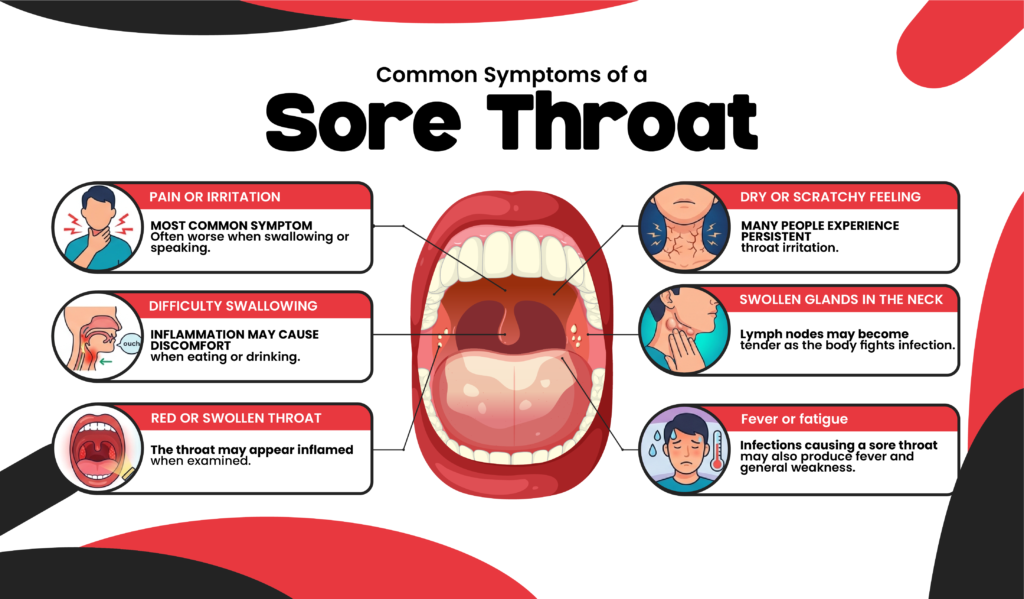
A sore throat often occurs alongside other symptoms that can provide clues about the underlying cause. Typical Symptoms Include:
- Pain or irritation in the throat: The most common symptom, often worse when swallowing or speaking.
- Difficulty swallowing: Inflammation may cause discomfort when eating or drinking.
- Red or swollen throat: The throat may appear inflamed when examined.
- Dry or scratchy feeling: Many people experience persistent throat irritation.
- Swollen glands in the neck: Lymph nodes may become tender as the body fights infection.
- Fever or fatigue: Infections causing a sore throat may also produce fever and general weakness.
What Causes a Sore Throat?
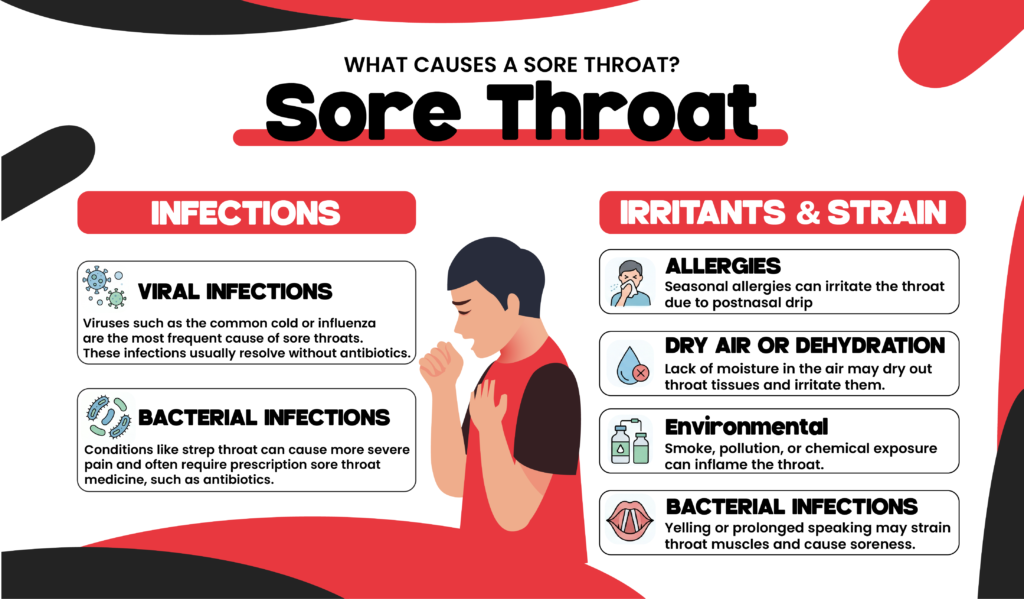
A sore throat can occur for several reasons, most commonly infections or irritation of the throat tissues. Identifying the cause helps determine the expected sore throat duration and the appropriate treatment. Common Causes of Sore Throat are:
- Viral infections: Viruses such as the common cold or influenza are the most frequent cause of sore throats. These infections usually resolve without antibiotics.
- Bacterial infections: Conditions like strep throat can cause more severe pain and often require prescription sore throat medicine, such as antibiotics.
- Allergies: Seasonal allergies can irritate the throat due to postnasal drip.
- Dry air or dehydration: Lack of moisture in the air may dry out throat tissues and irritate them.
- Environmental: Smoke, pollution, or chemical exposure can inflame the throat.
- Excessive voice use: Yelling or prolonged speaking may strain throat muscles and cause soreness.
How Long Does a Sore Throat Last?
One of the most common concerns people have is how long does a sore throat last. The answer depends on the underlying cause. Most sore throats caused by viral infections last 3 to 7 days, gradually improving as the immune system clears the infection. Mild irritation from environmental factors may resolve even faster. However, certain infections or medical conditions may extend the sore throat duration beyond a week.
Sore Throat Duration by Cause
- Common Cold: Throat irritation typically lasts 3–5 days and improves as cold symptoms fade.
- Flu (Influenza): Sore throat may persist for 5–7 days, often accompanied by fever, body aches, and fatigue.
- Strep Throat: Without treatment, symptoms may last 7–10 days, but proper sore throat medicine can shorten recovery.
- Allergies or Irritation: Symptoms may continue as long as the trigger is present.
- Tonsillitis: Inflammation of the tonsils may cause throat pain lasting up to 10 days.
If symptoms worsen, become severe, or do not improve within the expected timeframe, consider visiting an ER near me for prompt medical evaluation.
Sore Throat Remedies That Can Help
While many sore throats resolve naturally, several sore throat remedies can help reduce discomfort and support faster recovery. Effective Sore Throat Remedies include:
- Stay hydrated: Drinking warm fluids like herbal tea, broth, or warm water with honey helps soothe throat tissues.
- Saltwater gargle: Gargling warm salt water may reduce swelling and bacteria in the throat.
- Use throat lozenges: Lozenges help keep the throat moist and relieve irritation.
- Humidify the air: Using a humidifier can add moisture to dry air and reduce throat irritation.
- Rest your voice: Limiting talking allows inflamed throat tissues to recover.
These simple sore throat remedies can significantly reduce discomfort and support the body’s natural healing process.
Sore Throat Medicine
In some cases, medication may be necessary to relieve symptoms or treat infections causing throat pain. Common Sore Throat Medicines:
- Pain relievers: Over-the-counter medications like acetaminophen or ibuprofen help reduce pain and inflammation.
- Throat sprays or lozenges: These products numb the throat and provide temporary relief.
- Antibiotics: Doctors prescribe antibiotics only for bacterial infections like strep throat.
- Antihistamines: These may help if allergies are causing throat irritation.
Using appropriate sore throat medicine can shorten recovery time and reduce discomfort when symptoms are severe.
How To Get Rid of a Sore Throat Faster
Many people search for ways to get rid of a sore throat quickly, especially when symptoms interfere with daily activities. Tips to Speed Recovery:
- Drink warm liquids frequently: Warm beverages help soothe throat tissues and reduce irritation.
- Get enough rest: Allowing the body to recover supports the immune system.
- Avoid smoking or irritants: Smoke and pollutants can worsen throat inflammation.
- Use throat-soothing foods: Honey, soups, and soft foods can ease discomfort.
- Follow prescribed medication instructions: If your doctor recommends treatment, taking medication as directed can speed recovery.
While these steps cannot always eliminate symptoms immediately, they can significantly improve comfort and shorten the duration of a sore throat.
When to Go to the ER for a Sore Throat
While most sore throats improve on their own, certain symptoms can indicate a serious infection or complication that requires immediate medical attention. Go to the ER if you experience:
- Severe difficulty breathing or swallowing
- High fever above 101°F that doesn’t improve with medication
- Intense throat pain with swelling or white patches on the tonsils
- Persistent vomiting or dehydration
- Swollen lymph nodes accompanied by severe pain
- Confusion, dizziness, or sudden weakness
These warning signs may indicate strep throat, tonsillitis, or another severe infection that needs urgent evaluation. Prompt care can prevent complications and speed recovery, especially at an ER for sore throat.
Expert Care at Texas Emergency Care Center
For patients experiencing severe or persistent sore throat symptoms, Texas Emergency Care Center provides comprehensive, 24/7 care. Our experienced physicians can:
- Quickly assess and diagnose bacterial infections such as strep throat or tonsillitis
- Prescribe appropriate medications, including antibiotics when necessary
- Provide IV fluids or pain management for dehydration or severe discomfort
- Offer guidance on home care and follow-up to prevent recurrence
Early intervention at a specialized center like Texas Emergency Care Center ensures rapid relief, prevents complications, and supports long-term throat and overall health.
Key Takeaways
- Sore Throat Is a Common Symptom: A sore throat often occurs due to infections, allergies, or environmental irritants.
- Typical Sore Throat Duration: Most sore throats last 3–7 days, depending on the underlying cause.
- Home Care Can Help: Simple sore throat remedies such as hydration, saltwater gargles, and rest may relieve symptoms.
- Medication May Be Necessary: Certain infections require sore throat medicine like antibiotics or pain relievers.
- Know When to Seek Care: If symptoms are severe or persist beyond 10 days, medical evaluation is recommended.
Frequently Asked Questions
Can an ear infection cause jaw pain?
Yes, ear infections can irritate shared nerves between the ear and jaw, causing pain to spread. Increased pressure and inflammation in the ear can also affect nearby structures. This often results in discomfort that feels like it’s coming from the jaw.
How can I tell if jaw pain is from an ear infection?
Jaw pain linked to an ear infection is usually on the same side as the earache. It may worsen when chewing or opening your mouth. Other signs, like fever, ear drainage, or hearing changes, can help confirm the cause.
When should I seek medical care for ear and jaw pain?
Seek medical care if the pain is severe, persistent, or getting worse over time. Warning signs include high fever, swelling, hearing loss, or dizziness. These symptoms may indicate complications that need prompt treatment.