




Feeling shaky, dizzy, weak, or suddenly exhausted can be frightening, especially when the symptoms seem to appear out of nowhere. Many people are left wondering, “What Causes Low Blood Sugar Without Diabetes?” and whether these unexpected episodes could be a sign of something more serious. When symptoms keep returning or begin interfering with daily life, it is important not to ignore what your body may be trying to tell you.
Although low blood sugar is commonly linked to diabetes, it can also happen in people without the condition for several different reasons. In some cases, the cause may be temporary and harmless, while in others it may point to an underlying medical problem that needs attention. At our 24/7 emergency room, patients experiencing severe weakness, confusion, fainting, or recurring symptoms can receive immediate evaluation and emergency care at any time of day or night.
What Is Low Blood Sugar?
Low blood sugar, or hypoglycemia, occurs when blood glucose drops below the level needed for normal body function. Since glucose is the brain’s main energy source, stable levels are essential for daily functioning. In most adults, levels below 70 mg/dL are considered low, though severity can vary. If not addressed in time, hypoglycemia can become dangerous and may require medical attention.
According to an NIH-published study, a large retrospective review of 38,898 hospitalized patients found that non-diabetic hypoglycemia occurred in approximately 36 out of every 10,000 hospital admissions.
Dangerous Symptoms Of Low Blood Sugar
- Severe confusion or disorientation
- Blurred vision
- Extreme weakness or inability to stay awake
- Fainting or loss of consciousness
- Seizures or convulsions
- Difficulty speaking or responding normally
Causes of Low Blood Sugar Without Diabetes
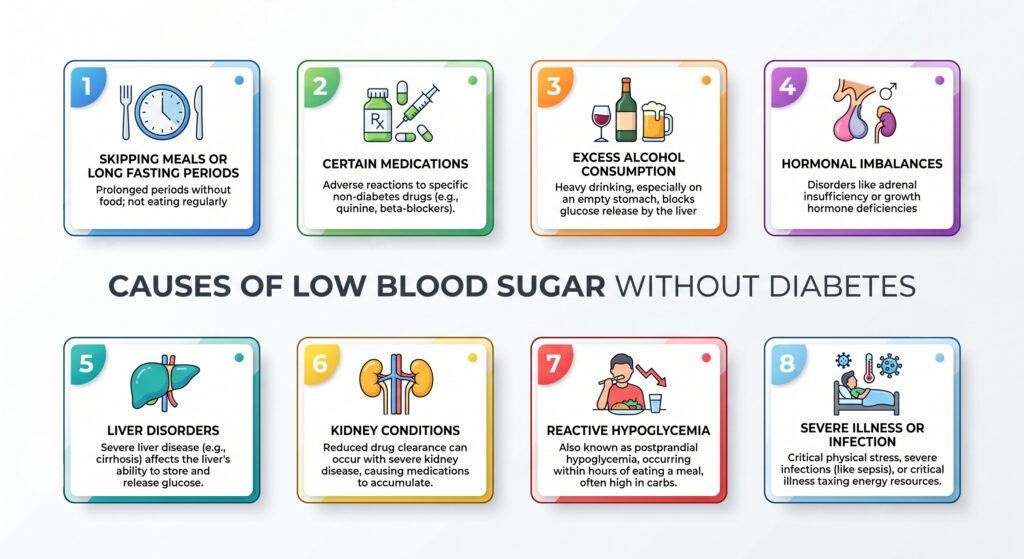
Experiencing low blood sugar without having diabetes can feel confusing and concerning, especially when it happens unexpectedly. Many people are surprised to learn that blood sugar levels can drop due to a variety of everyday and medical factors. Understanding the possible reasons behind these changes is important for recognizing when the body may need medical attention.
1. Skipping Meals or Long Fasting Periods
When the body goes too long without food, it can run out of readily available glucose for energy. This is more likely if meals are irregular or significantly delayed. The liver stores some glucose, but these reserves can become depleted over time. As a result, blood sugar levels may drop below the normal range.
2. Certain Medications
Some medications can unintentionally lower blood sugar levels even in people without diabetes. This may happen due to how they affect insulin release or liver function. The risk can increase when multiple medications are taken together. In some cases, dosage or individual sensitivity plays a key role.
3. Excess Alcohol Consumption
Alcohol can interfere with the liver’s ability to release stored glucose into the bloodstream. This effect is more pronounced when drinking on an empty stomach. Over time, the body may struggle to maintain stable energy levels. This can lead to sudden drops in blood sugar.
4. Hormonal Imbalances
Hormones produced by the adrenal and pituitary glands help regulate blood sugar levels. When these hormones are not produced in normal amounts, glucose control can be affected. This can lead to unstable or unpredictable blood sugar patterns. Such imbalances often require medical evaluation for proper diagnosis.
5. Liver Disorders
The liver plays a key role in storing and releasing glucose when the body needs energy. When liver function is impaired, this process may not work efficiently. As a result, blood sugar levels may fall unexpectedly. Chronic liver conditions can increase this risk over time.
6. Kidney Conditions
The kidneys also contribute to maintaining overall metabolic balance in the body. Certain kidney disorders can affect how glucose is processed and regulated. This may disrupt normal blood sugar stability. In more advanced cases, the risk of hypoglycemia can increase.
7. Reactive Hypoglycemia
In some people, blood sugar drops a few hours after eating, especially after meals high in sugar or refined carbohydrates. This happens when the body releases more insulin than needed. The excess insulin lowers glucose levels too quickly. It often leads to sudden energy crashes after meals.
8. Severe Illness or Infection
When the body is fighting a serious illness or infection, energy demands can increase significantly. At the same time, appetite and food intake may decrease. This combination can reduce available glucose in the bloodstream. In some cases, it may lead to sudden or repeated low blood sugar episodes.
Who Can Develop Low Blood Sugar Without Diabetes?
Low blood sugar without diabetes can affect many people, including those who are otherwise healthy. It may occur when the body struggles to maintain stable glucose levels due to lifestyle habits, medical conditions, or natural physiological changes. Understanding who may be at risk can help with early recognition and timely medical attention.
- People who skip meals or fast frequently: Irregular eating reduces steady glucose intake, which can cause blood sugar to drop over time.
- Individuals who consume alcohol excessively: Alcohol can interfere with the liver’s glucose release, especially when taken without food.
- People with hormonal disorders: Adrenal or pituitary gland issues can disrupt normal blood sugar regulation.
- Individuals with liver or kidney conditions: Impaired organ function can affect glucose storage and balance in the body.
- People recovering from severe illness or infection: Increased energy demand and reduced appetite can lower glucose levels.
- Older adults: Age-related changes in metabolism and appetite can make blood sugar less stable.
When To Go To The ER
Low blood sugar can sometimes become a medical emergency, especially when it affects brain function or prevents a person from acting normally. While mild episodes may improve with food or glucose intake, severe or persistent symptoms should never be ignored.
- Loss of consciousness or fainting: Indicates a severe drop in blood sugar where the brain is not getting enough energy. Immediate emergency care is needed.
- Seizures or convulsions: Sudden uncontrolled movements caused by critically low glucose levels. This is a medical emergency.
- Severe confusion or inability to respond: Difficulty thinking or communicating clearly suggests the brain is being affected. Requires urgent evaluation.
- Inability to swallow or keep food down: Prevents safe correction of low blood sugar at home and increases risk of worsening.
- Symptoms that do not improve after sugar intake: Ongoing hypoglycemia may signal an underlying serious condition.
- Repeated episodes of low blood sugar: Frequent drops suggest an unresolved health issue that should be checked by a doctor.
Treatment For Low Blood Sugar Without Diabetes
Treating low blood sugar without diabetes focuses on quickly restoring normal glucose levels and then addressing the underlying reason behind the drop. In many cases, immediate correction can relieve symptoms, but repeated episodes require medical evaluation to prevent recurrence. If symptoms persist or worsen, seeking diabetes treatment near me or urgent medical care can help ensure proper diagnosis and timely management.
- Fast-acting carbohydrate intake: Consuming quick sources of sugar such as glucose tablets, fruit juice, or regular soda can rapidly raise blood sugar levels. This is usually the first step in mild to moderate cases.
- Balanced meal consumption: Eating a combination of carbohydrates, protein, and healthy fats helps stabilize blood sugar after initial correction. This reduces the risk of another sudden drop.
- Frequent small meals: Eating smaller meals at regular intervals helps maintain steady glucose levels throughout the day. This is especially helpful for individuals prone to recurrent episodes.
- IV glucose in emergencies: In severe cases, intravenous glucose may be administered in a medical setting to quickly restore normal levels. This is used when a person cannot eat or is unconscious.
- Treating the underlying cause: Managing conditions such as hormonal imbalance, liver issues, or other medical problems is essential for long-term control. Treatment is tailored based on diagnosis.
- Medications (prescribed by the doctor): In specific cases, doctors may prescribe medications to regulate hormone levels or metabolic function. These should only be taken under strict medical supervision.
Emergency Care at Texas Emergency Care Center
Low blood sugar episodes can sometimes become serious very quickly, especially when symptoms are severe, recurring, or do not improve with food intake. In such situations, delaying care can increase the risk of complications that affect brain function and overall health. Recognizing when symptoms are no longer manageable at home is essential for timely treatment and safety.
At Texas Emergency Care Center, patients experiencing symptoms related to What Causes Low Blood Sugar Without Diabetes receive immediate evaluation and prompt emergency care. Our medical team is available 24/7 to stabilize blood sugar levels, identify the underlying cause, and provide advanced treatment to prevent further complications. Early intervention can make a critical difference in recovery and overall outcomes.
Key Takeaway
- Low blood sugar can occur even in people without diabetes and should not be ignored.
- It may develop due to multiple lifestyle, hormonal, organ-related, or metabolic factors.
- Recurrent or unexplained episodes often indicate an underlying health issue that needs evaluation.
- Certain individuals, including older adults and those with medical conditions, may be more at risk.
- Severe symptoms like confusion, fainting, or seizures require immediate emergency care.
- Timely diagnosis and proper treatment can help prevent complications and stabilize blood sugar levels.