



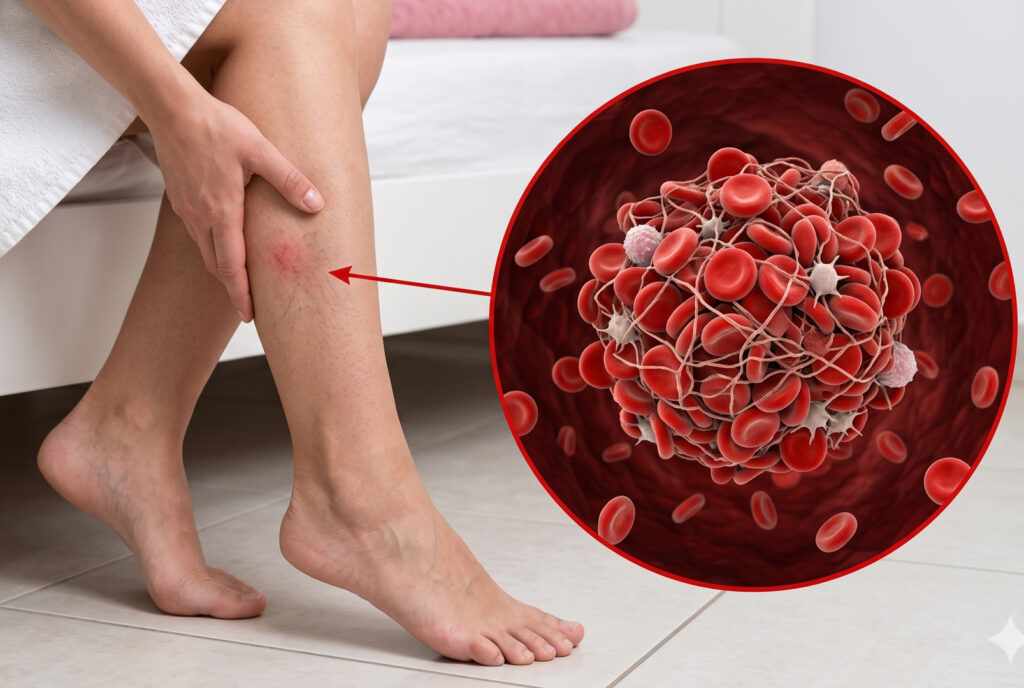
It can be frightening to suddenly experience unexplained symptoms like shortness of breath or chest discomfort. Many people begin to wonder what causes blood clots in the lungs in such situations. These symptoms are sometimes linked to a dangerous condition known as a pulmonary embolism (PE). This occurs when a clot, often formed in the legs, travels through the bloodstream and blocks an artery in the lungs, disrupting normal blood flow.
Because a pulmonary embolism can worsen quickly and become life-threatening, recognizing the warning signs early is essential. Prompt medical attention can make all the difference, and our ER for blood clot complications is equipped to provide immediate evaluation and emergency treatment when every second counts.
What Is a Blood Clot?
A blood clot is a thickened mass of blood formed when platelets and proteins bind together to stop bleeding after injury. While clotting is a normal healing process, abnormal clot formation inside veins can become dangerous. These clots may block blood flow and lead to conditions such as deep vein thrombosis (DVT) or pulmonary embolism (PE).
A population study in Malmö, Sweden (1998–2006) found that among VTE patients, pulmonary embolism occurred in 29% of cases, with a yearly incidence of 19 per 100,000 people. This highlights that while less common than DVT, PE remains a serious and medically significant condition requiring urgent attention.
How to Tell If You Have a Blood Clot?
- Sudden swelling in one leg or arm.
- Pain or tenderness in the affected area.
- Red or warm skin over the swollen region.
- Sudden shortness of breath.
- Sharp chest pain that worsens with breathing.
What Causes Blood Clots In The Lungs
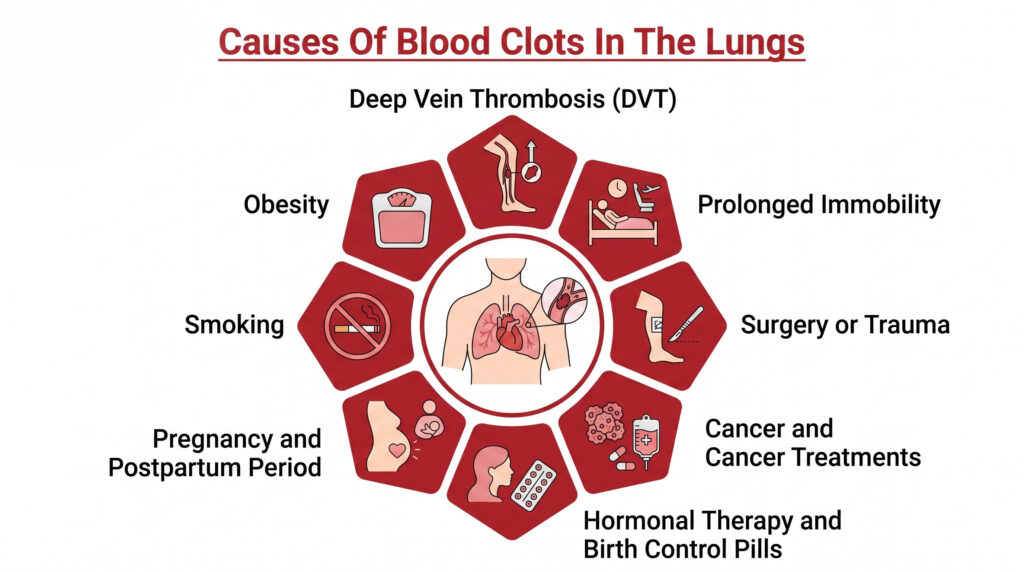
A blood clot in the lungs, known as a pulmonary embolism, usually develops when a clot forms in another part of the body and travels to the lungs, blocking blood flow. This condition can develop silently and may become life-threatening if not treated quickly. Many people do not realize they are at risk until symptoms suddenly appear.
Deep Vein Thrombosis (DVT)
Deep vein thrombosis is the most common source of blood clots that reach the lungs. It occurs when a clot forms in the deep veins of the legs or pelvis, often due to slow or restricted blood flow. If part of the clot breaks loose, it can travel through the bloodstream and lodge in the lungs. This is one of the primary pathways leading to pulmonary embolism.
Prolonged Immobility
Long periods of inactivity, such as bed rest, long flights, or sitting for hours, can slow blood circulation in the legs. When blood flow decreases, clots are more likely to form in the deep veins. These clots can later travel to the lungs and cause a blockage. Even short-term immobility after illness or surgery can increase risk.
Surgery or Trauma
Major surgery, especially involving the hips, knees, or abdomen, can significantly increase clot risk. Tissue injury activates the body’s clotting response, sometimes excessively. Reduced movement during recovery further raises the chance of clot formation. In some cases, these clots can move to the lungs if not prevented or treated early.
Cancer and Cancer Treatments
Certain cancers increase substances in the blood that promote clotting. Treatments such as chemotherapy can also damage blood vessels and affect normal circulation. This combination makes clot formation more likely in patients with cancer. Pulmonary embolism risk is therefore higher in both active cancer and treatment phases.
Hormonal Therapy and Birth Control Pills
Estrogen-based medications, including some birth control pills and hormone replacement therapy, can increase blood clotting tendency. They may slightly change the balance of clotting factors in the blood. This makes clots more likely to form in the veins, especially in individuals with other risk factors. In rare cases, these clots can travel to the lungs.
Pregnancy and Postpartum Period
During pregnancy, the body naturally becomes more prone to clotting to prevent excessive bleeding during delivery. Pressure from the growing uterus can also slow blood flow in the legs. The risk remains elevated for several weeks after childbirth. These factors together increase the likelihood of clots forming and moving to the lungs.
Smoking
Smoking damages blood vessel walls and affects normal blood circulation. It also increases the stickiness of blood, making clot formation more likely. Over time, this damage significantly raises the risk of deep vein clots. If these clots dislodge, they can travel to the lungs and cause a pulmonary embolism.
Obesity
Excess body weight puts added pressure on veins, especially in the lower body. This can slow blood flow and contribute to clot formation in the legs. Obesity is also linked with chronic inflammation, which increases clotting risk. Together, these factors make pulmonary embolism more likely in affected individuals.
Blood Clots In Lungs Recovery Time
Recovery from blood clots in the lungs varies from person to person depending on clot size, overall health, and how quickly treatment begins. Most people improve gradually with proper medication, but full recovery can take time as the body slowly breaks down the clot and restores normal blood flow.
- Initial improvement: 1 to 2 weeks after starting treatment
- Noticeable recovery: 3 to 6 weeks
- Full recovery: 3 to 6 months in most cases
- Severe or complicated cases: may take longer than 6 months with ongoing care
When To Go To The ER
You should go to the ER immediately if you suspect a blood clot in the lungs because it can quickly become life-threatening. Symptoms often appear suddenly and may worsen without warning, so early medical care is critical. Do not wait for symptoms to improve on their own, as delays can increase the risk of serious complications.
- Sudden shortness of breath or difficulty breathing
- Sharp or worsening chest pain, especially when breathing deeply
- Coughing up blood or pink-tinged mucus
- Rapid heartbeat, dizziness, or fainting
- Severe unexplained sweating or anxiety with breathing trouble
- Blue lips or fingertips (low oxygen levels)
- Swelling, pain, or redness in one leg (possible DVT source)
- Sudden collapse or extreme weakness
If you or a loved one experience any of these symptoms, visit our 24/7 emergency room immediately for prompt evaluation and treatment.
How To Treat A Blood Clot in Lungs
A blood clot in the lungs, known as a pulmonary embolism, is treated as a medical emergency because it can block blood flow and reduce oxygen in the body. Treatment focuses on stopping the clot from growing, preventing new clots, and restoring normal circulation.
- Blood thinners (Anticoagulants prescribed by the doctor): Medications like heparin or warfarin help prevent new clots from forming and stop existing ones from getting larger.
- Direct oral anticoagulants (Prescribed by the doctor): Drugs such as apixaban or rivaroxaban are commonly used for long-term clot prevention.
- Thrombolytic therapy (Clot-busting drugs prescribed by the doctor): In severe, life-threatening cases, medicines are used to quickly dissolve the clot.
- Oxygen therapy: Given in the hospital to improve oxygen levels and ease breathing difficulty.
- Surgical or catheter procedures: In rare cases, doctors may physically remove or break up the clot if medication is not enough.
- Compression stockings: Help prevent further clot formation in the legs by improving blood flow and reducing swelling.
Blood Clots in Lungs Care at Texas Emergency Care Center
Blood clots in the lungs require immediate attention to prevent life-threatening complications. Many cases begin silently before sudden symptoms appear, making early diagnosis essential.
At Texas Emergency Care Center, patients experiencing symptoms related to what causes blood clots in lungs receive prompt evaluation and emergency treatment. Our team is trained to quickly identify the underlying cause, stabilize the condition, and provide immediate care to reduce the risk of further complications.
Key Takeaway
- Blood clots in the lungs (pulmonary embolism) are a medical emergency that can become life-threatening if not treated quickly.
- They often develop when a clot travels from the legs to the lungs, blocking normal blood flow.
- Early symptoms like shortness of breath, chest pain, or coughing up blood should never be ignored.
- Several risk factors increase chances, including immobility, surgery, cancer, smoking, and hormonal therapy.
- Prompt diagnosis and treatment can significantly improve recovery and reduce complications.
- Emergency care plays a vital role in stabilizing the condition and preventing further clot formation.
Frequently Asked Questions
Can blood clots in the lungs go away on their own?
No. Most pulmonary embolisms require immediate medical treatment to prevent serious complications and reduce the risk of death.
How dangerous are blood clots in the lungs?
Blood clots in the lungs are extremely dangerous because they can suddenly block oxygen supply and strain the heart. In severe cases, they may lead to organ failure, collapse, or death if not treated immediately.
What do blood clots in lungs feel like?
A blood clot in the lungs may feel like sudden shortness of breath, sharp chest pain that worsens with breathing, rapid heartbeat, dizziness, or anxiety. Some people may also experience coughing or a feeling of pressure in the chest.
What are the first signs of a lung blood clot?
Early signs often include unexplained shortness of breath, chest pain, coughing blood, fast heartbeat, and lightheadedness.
Can you survive a blood clot in the lungs?
Yes, survival is possible with quick diagnosis and emergency treatment. Outcomes are much better when care is provided immediately.