




Many women experience abdominal discomfort, but pain on one side can be especially concerning. Lower left abdominal pain in women may affect daily activities and, in some cases, require evaluation at our ER in Pearland.
Although some causes of abdominal pain may be minor, symptoms should not be ignored when the pain becomes severe, persistent, or is accompanied by fever, nausea, dizziness, or unusual bleeding. Because certain conditions can progress quickly, seeking prompt medical evaluation is important to identify the cause and receive timely treatment.
What Is Left Lower Abdominal Pain?
Left lower abdominal pain is discomfort, cramping, or sharp pain felt in the lower-left abdomen. In women, it may be mild or severe and can affect daily activities. It may occur with symptoms like bloating, nausea, fever, or bowel changes. Because multiple organs are located in this area, persistent or worsening pain should be medically evaluated.
A review from the National Center for Biotechnology Information (NCBI) reports that about 70% of patients with acute diverticulitis present with left lower abdominal pain, highlighting the need for timely diagnosis.
Dangerous Lower Left Abdominal Pain Symptoms In Women
- Severe or sudden lower left abdominal pain.
- Fever or chills.
- Persistent nausea or vomiting.
- Dizziness, fainting, or weakness.
- Heavy vaginal bleeding or unusual discharge.
- Blood in the stool or urine.
- Difficulty passing urine.
- Severe abdominal swelling or bloating.
- Pain that worsens with movement.
- Shortness of breath or rapid heartbeat.
- Inability to eat or drink due to pain.
- Pain during pregnancy.
If you experience any of these symptoms, seek immediate medical attention at an ER for abdominal pain. Prompt evaluation can help identify the cause and prevent serious complications.
What Causes Lower Abdominal Pain On The Left In Women?
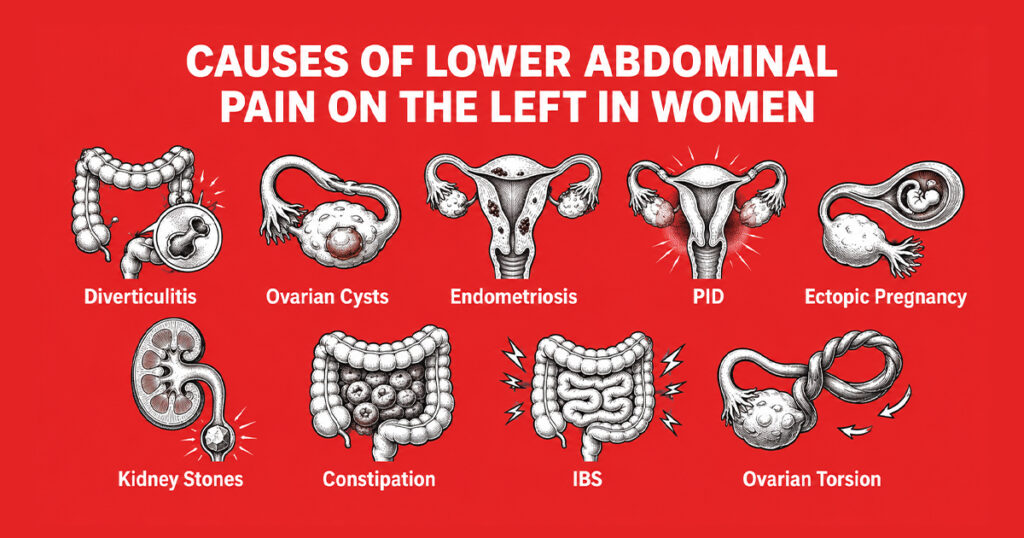
Lower left abdominal pain can be concerning, especially when it is severe, persistent, or accompanied by other symptoms. In women, pain in this area may involve organs within the digestive, urinary, or reproductive systems. The discomfort can range from mild cramping to sharp pain, making it important to understand the possible causes and know when medical evaluation may be needed.
Diverticulitis
Diverticulitis occurs when small pouches in the colon become inflamed or infected. Because the lower colon is located on the left side, this condition commonly causes lower left abdominal pain. Symptoms may also include fever, nausea, bloating, and changes in bowel habits. Severe cases can lead to serious complications and require prompt medical treatment.
Ovarian Cysts
Ovarian cysts are fluid-filled sacs that develop on or inside an ovary. When a cyst forms on the left ovary, it may cause pain, pressure, or discomfort in the lower left abdomen. Some women also experience bloating or menstrual changes. Sudden severe pain may occur if a cyst ruptures.
Endometriosis
Endometriosis occurs when tissue similar to the uterine lining grows outside the uterus. This condition can cause chronic pelvic pain that may be felt on the lower left side. Symptoms often worsen during menstrual periods and may include painful intercourse and heavy bleeding. Early diagnosis can help improve symptom control.
Pelvic Inflammatory Disease (PID)
Pelvic inflammatory disease is an infection of the female reproductive organs. It can cause lower abdominal pain, fever, unusual vaginal discharge, and painful urination. The infection may affect one or both sides of the pelvis. Timely treatment is important to prevent long-term complications.
Ectopic Pregnancy
An ectopic pregnancy happens when a fertilized egg implants outside the uterus, usually in a fallopian tube. This can cause sharp lower left abdominal pain if the left tube is involved. Symptoms may also include vaginal bleeding, dizziness, or fainting. Immediate emergency care is necessary because the condition can become life-threatening.
Kidney Stones
Kidney stones are hard mineral deposits that can cause severe pain as they move through the urinary tract. The pain may spread from the side or back into the lower left abdomen. Additional symptoms can include nausea, painful urination, and blood in the urine. Some stones require medical treatment to pass.
Constipation
Constipation can cause pressure, cramping, and discomfort in the lower left abdomen. Hard stools and infrequent bowel movements may lead to bloating and abdominal pain. Symptoms often improve after normal bowel movements return. Persistent constipation should be evaluated by a healthcare provider.
Irritable Bowel Syndrome (IBS)
Irritable bowel syndrome is a common digestive disorder that affects bowel function. It frequently causes lower abdominal pain, bloating, gas, diarrhea, or constipation. Many people notice symptoms worsen after certain foods or during stress. Although IBS is not life-threatening, it can significantly affect daily life.
Ovarian Torsion
Ovarian torsion occurs when an ovary twists and cuts off its own blood supply. It typically causes sudden, severe pain on one side of the lower abdomen and may be accompanied by nausea or vomiting. This is a medical emergency that requires immediate treatment. Early intervention helps prevent permanent damage to the ovary.
When To Go To The ER
While some cases of lower left abdominal pain may improve on their own, certain symptoms can indicate a serious medical condition that requires immediate evaluation. Seeking emergency care without delay can help prevent complications and ensure timely treatment.
- Sudden or severe abdominal pain.
- Pain that rapidly worsens.
- Fever with abdominal pain.
- Persistent nausea or vomiting.
- Dizziness, fainting, or loss of consciousness.
- Heavy vaginal bleeding.
- Pain during pregnancy.
- Blood in the stool or urine.
- Severe abdominal swelling or bloating.
- Difficulty breathing or chest pain.
- Inability to pass urine.
- Signs of dehydration, such as extreme thirst or very little urine.
If you experience any of these symptoms, seek immediate medical attention at an emergency room near me. Prompt evaluation can help identify the cause and prevent serious complications.
How To Treat Lower Left Abdominal Pain In Women
Lower left abdominal pain can be frustrating and concerning, especially when it affects daily activities. Treatment depends on the underlying cause and severity of symptoms. Some cases improve with self-care measures, while others require medications, procedures, or emergency treatment.
- Over-The-Counter Pain Relievers: Most doctors recommend acetaminophen for mild to moderate abdominal pain. Pain medication may provide temporary relief while the underlying cause is being evaluated.
- Anti-Inflammatory Medications: Most doctors recommend NSAIDs, such as ibuprofen, to help reduce pain and inflammation associated with certain gynecological conditions or menstrual cramps.
- Antibiotic Treatment: Bacterial infections such as pelvic inflammatory disease or diverticulitis may require prescription antibiotics. Early treatment can help prevent complications and speed recovery.
- Dietary Changes: Adjusting the diet and avoiding foods that worsen symptoms may help relieve digestive-related abdominal pain. A healthcare provider may recommend specific dietary modifications based on the cause.
- Warm Compress Or Heating Pad: Applying gentle heat to the lower abdomen may help ease muscle tension, cramping, and pelvic discomfort. This method is commonly used for menstrual-related pain.
- Treatment For Constipation: Most doctors recommend increasing fiber intake, drinking more water, and using stool softeners or laxatives when appropriate. Relieving constipation can reduce pressure and abdominal pain.
- Hormonal Therapy: Hormonal medications may be prescribed for conditions such as endometriosis or recurrent ovarian cysts. These treatments can help manage symptoms and reduce recurrence.
- Kidney Stone Management: Small kidney stones may pass with hydration and pain management. Larger stones may require medical procedures to remove or break them apart.
- Minimally Invasive Procedures: Conditions such as ovarian cysts or endometriosis may require laparoscopic treatment. These procedures can diagnose and treat the source of pain with smaller incisions.
- Emergency Surgery: Serious conditions such as ectopic pregnancy, ovarian torsion, or bowel perforation may require immediate surgery. Prompt treatment is critical to prevent life-threatening complications.
If lower left abdominal pain is severe, worsening, or accompanied by concerning symptoms such as fever, vomiting, dizziness, or heavy bleeding, visit our 24/7 emergency room for prompt evaluation and treatment.
Lower Left Abdominal Pain Care At Texas Emergency Care Center
Lower left abdominal pain can sometimes signal a serious medical condition, especially when it is severe, persistent, or accompanied by other symptoms. Prompt evaluation can help identify the cause and prevent complications.
At Texas Emergency Care Center, patients receive fast evaluation and treatment for lower left abdominal pain, pelvic pain, nausea, fever, and other related symptoms. Our team focuses on accurate diagnosis, symptom relief, and timely care.
Key Takeaways
- Lower left abdominal pain in women can involve the digestive, urinary, or reproductive systems.
- Common causes include diverticulitis, ovarian cysts, endometriosis, PID, kidney stones, constipation, IBS, and ectopic pregnancy.
- Sudden, severe, or worsening pain should never be ignored.
- Symptoms such as fever, vomiting, dizziness, heavy bleeding, or blood in the stool require prompt medical attention.
- Treatment depends on the underlying cause and may include medications, lifestyle changes, procedures, or surgery.
- Ectopic pregnancy and ovarian torsion are medical emergencies that require immediate care.
- Early diagnosis and treatment can help prevent serious complications and support recovery.
- Emergency evaluation is recommended for severe pain, pregnancy-related pain, or other concerning symptoms.