




Seizures happen when the brain experiences a sudden disruption in its normal electrical activity. This abnormal activity can affect movement, awareness, behavior, or sensations, and may last from a few seconds to several minutes. Seizures have many possible causes, ranging from epilepsy and head injuries to infections, high fever, or low blood sugar. Understanding what causes seizures helps people recognize warning signs early and know when emergency medical care is necessary. If a seizure is prolonged, occurs for the first time, or is accompanied by breathing problems or injury, seeking immediate care at an ER in Pearland is essential for prompt evaluation and treatment.
What Is a Seizure?
A seizure is a sudden change in brain activity that can happen without warning and temporarily affects how a person moves, thinks, or behaves. Many people ask what is a seizure when they see someone suddenly stare, shake, or act confused, because it can look frightening and unpredictable.
Some seizures are brief and may only look like confusion or blank staring, while others can cause shaking or loss of awareness. In many cases, the person does not remember what happened afterward, which can make seizures alarming. ER in Pearland is needed when it lasts too long, happens for the first time, or causes breathing issues or injury.
Common Causes of Seizures
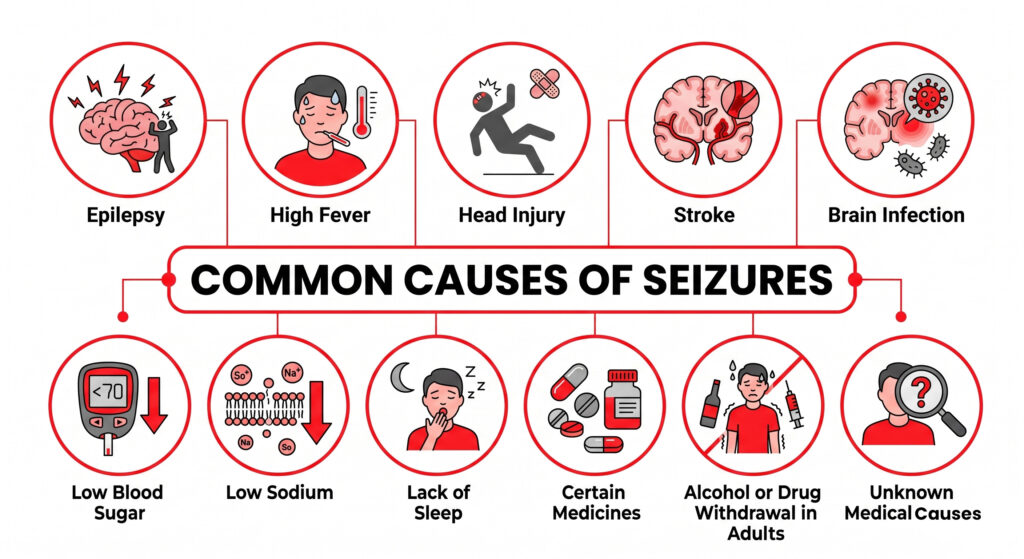
Seizures happen when normal electrical activity in the brain is disrupted. This disruption can be caused by several medical conditions or temporary changes inside the body. Understanding what causes a seizure helps identify risk factors early and supports faster medical treatment when symptoms appear.
Epilepsy
Epilepsy is a neurological condition that increases the risk of repeated seizures. It is caused by abnormal electrical activity in the brain that disrupts normal signals. Many patients need long-term treatment and regular medical follow-up to control seizures.
High Fever
A sudden high fever, especially in children, can trigger seizures known as febrile seizures. These usually happen when body temperature rises quickly due to infection or illness. Although often brief, they should still be evaluated by a doctor.
Head Injury
A head injury from a fall, accident, or trauma can disturb normal brain activity and lead to seizures. Even mild injuries may sometimes affect how the brain processes electrical signals. Symptoms can appear immediately or develop later after the injury.
Stroke
A stroke occurs when blood flow to the brain is blocked or reduced, damaging brain tissue. This damage can trigger seizures during or after the stroke event. It is more common in severe strokes or during recovery.
Brain Infection
Brain infections like meningitis or encephalitis can irritate brain tissue and cause seizures. These infections interfere with normal brain function and may worsen quickly if untreated. Immediate medical care is essential to prevent complications.
Low Blood Sugar
Low blood sugar reduces the brain’s energy supply and can quickly trigger seizures. It is commonly seen in people with diabetes or irregular eating habits. If not corrected quickly, it can become a medical emergency.
Low Sodium
Low sodium levels disrupt normal brain electrical activity and may lead to seizures. This imbalance can develop due to dehydration, illness, or certain medications. Severe cases require hospital treatment to safely correct sodium levels.
Lack of Sleep
Severe lack of sleep increases brain sensitivity and can trigger seizures in some people. It affects the brain’s ability to maintain stable electrical activity. Good sleep habits help reduce the risk of seizure episodes.
Certain Medicines
Some medicines can lower the brain’s seizure threshold and increase the risk of seizures. This depends on the type of medication and individual health conditions. Doctors may adjust or change treatment if needed.
Alcohol or Drug Withdrawal in Adults
Sudden withdrawal from alcohol or drugs can overstimulate the brain and trigger seizures. This is more common in people with long-term substance use. It may require medical supervision for safe detoxification.
Unknown Medical Causes
In some cases, no clear cause of seizures is found even after detailed testing. These are called idiopathic or unexplained seizures. Doctors may continue monitoring and testing to better understand the condition.
Some seizures may signal a serious underlying condition and require urgent medical evaluation. When symptoms are severe or persistent, Emergency Room Treatment for Seizures can provide timely diagnosis and critical care.
What Does a Seizure Feel Like?
A seizure can feel very different from person to person depending on the type, and many people describe it as a sudden disruption in normal awareness or body control. What a seizure feels like is often explained through early warning signs like unusual sensations, confusion, or emotional changes that appear without any clear reason. In more severe cases, a person may lose awareness completely and not remember the episode afterward.
- Confusion or sudden difficulty thinking clearly, often described as a foggy or spaced-out feeling
- Dizziness or lightheadedness that appears without any clear trigger
- Fear or anxiety that develops suddenly without an obvious reason
- Weakness in the body that makes movement or balance difficult
- Detachment from surroundings where things may feel unreal or distant
- Strange sensations such as tingling, odd smells, or unusual body feelings
- Blurred vision or temporary visual changes affecting clarity
- Inability to respond or communicate properly during the episode
Some people may also experience memory loss after the seizure ends and feel very tired, confused, or disoriented for several hours afterward.
What to Do When Someone Has a Seizure
A seizure can look frightening, but staying calm is the most important first step. Most seizures stop on their own within a few minutes, and the main goal is to keep the person safe and prevent injury until it ends. Knowing the right steps can make a big difference in an emergency situation.
- Stay calm and remain with the person throughout the seizure to ensure they are not alone
- Move sharp, hard, or dangerous objects away to prevent accidental injury
- Turn the person gently on their side if they are lying down to help keep the airway clear
- Time the seizure from the moment it starts to help doctors understand its severity
- Do not put anything in the person’s mouth, as it can cause choking or injury
- Do not restrain or hold the person down, as this can lead to harm
- Stay with them until they are fully alert, awake, and responsive again
If the seizure lasts longer than five minutes, happens repeatedly, or causes breathing difficulties, seek emergency medical care immediately and locate an emergency room near me for urgent evaluation and treatment.
When to Go to the ER for a Seizure
Some seizures need immediate medical attention because they may indicate a serious underlying health problem. Getting quick emergency care can help prevent complications such as brain injury, oxygen problems, or repeated seizure activity. Knowing the warning signs helps ensure the person receives timely and safe treatment. 24/7 emergency room is essential in these situations, providing immediate evaluation and treatment with little to no wait time so patients can receive urgent medical attention without unnecessary delays.
- Seizure lasts more than 5 minutes, which may indicate a medical emergency requiring urgent care.
- Another seizure occurs shortly after the first without full recovery in between episodes.
- Trouble breathing or signs of breathing difficulty during or after the seizure.
- Person does not wake up, respond, or return to normal awareness after the seizure ends.
- Injury occurs during the seizure such as a fall, head impact, or physical trauma.
- Seizure happens in water, increasing the risk of drowning or complications.
- First seizure ever experienced, even if symptoms appear mild or brief.
- Pregnancy, diabetes, or serious illness is present, increasing risk of complications.
Can Seizures Kill You?
Most seizures are not life-threatening and usually stop on their own without causing permanent damage. However, in certain situations, seizures can become dangerous, especially when they affect breathing, last too long, or are linked with serious medical conditions. These cases require immediate medical attention to prevent complications.
- Prolonged seizure activity that continues for several minutes without stopping.
- Repeated seizures occurring back-to-back without full recovery in between episodes.
- Breathing difficulties during or after the seizure affecting oxygen levels.
- Serious injury during a seizure such as head trauma or physical harm.
- Underlying medical conditions that increase the risk of severe complications.
How to Treat Seizures in an Emergency Room
Treatment for seizures in an emergency room depends on finding and managing the underlying cause as quickly as possible. Doctors first focus on stabilizing the patient, ensuring breathing is normal, and preventing further seizure activity. Immediate evaluation is important because seizures can sometimes be a sign of a serious medical condition that needs urgent care.
- Blood sugar checks to identify dangerously low glucose levels that may trigger seizures.
- Oxygen level monitoring to ensure the brain is receiving enough oxygen during and after the episode.
- Infection or fever screening to detect conditions like meningitis or other underlying illnesses.
- Electrolyte testing to check for imbalances such as low sodium or other mineral disruptions.
- Head injury evaluation to rule out trauma-related causes of seizure activity.
- Medication history review to identify drugs that may trigger or contribute to seizures.
- Neurological assessment to evaluate brain function and detect abnormalities.
Visit Texas Emergency Care Center for Seizure
Seizures require immediate and expert medical evaluation, especially when symptoms are severe or unexpected. Prompt diagnosis and treatment help reduce complications and ensure patient safety.
Texas Emergency Care Center provides 24/7 emergency services with minimal wait times, supported by advanced diagnostic capabilities including on-site laboratory testing and imaging services such as CT scans and X-rays. The facility is staffed with emergency-trained physicians equipped to manage critical neurological emergencies with speed and precision.
Key Takeaways
- A seizure is a sudden change in brain activity that can affect movement, awareness, or behavior.
- Common causes include epilepsy, high fever, head injury, low blood sugar, infections, and lack of sleep.
- Symptoms may include shaking, confusion, dizziness, blurred vision, or loss of awareness.
- Emergency care is needed if a seizure lasts more than 5 minutes, happens repeatedly, or causes breathing problems.
- Texas Emergency Care Center provides 24/7 emergency evaluation and treatment for seizure-related emergencies.
FAQs
What Triggers a Seizure?
Seizures can be triggered by conditions such as epilepsy, high fever, head injury, low blood sugar, infections, sleep deprivation, or alcohol withdrawal.
How Long Does a Seizure Usually Last?
Most seizures last from a few seconds to a few minutes. A seizure lasting longer than 5 minutes requires emergency medical attention.
Should You Go to the ER After a Seizure?
Emergency care is recommended if it is the first seizure, the seizure lasts too long, causes injury, or the person has trouble breathing afterward.