




High blood pressure isn’t just a number; it can silently increase your risk of heart attack, stroke, and other life-threatening complications. Some people may notice warning signs like severe headaches, dizziness, chest discomfort, or shortness of breath when blood pressure spikes, which require prompt attention.
Magnesium plays a key role in relaxing blood vessels, regulating muscle and nerve function, and supporting healthy circulation. Maintaining adequate magnesium levels through diet or supplements may help reduce strain on the cardiovascular system and support normal blood pressure, and in case of severe symptoms, an ER in Pearland can provide immediate medical care.
What Is Magnesium?
Magnesium is a vital mineral essential for normal body functions, including muscle and nerve activity, heart rhythm regulation, and blood sugar control. It also plays a key role in cardiovascular health by helping blood vessel muscles relax, promoting smoother blood flow, and supporting healthy blood pressure. Low magnesium intake has been linked to higher risks of hypertension, making adequate magnesium an important part of a heart-healthy lifestyle.
Can Magnesium Help With High Blood Pressure?
Magnesium may modestly lower blood pressure, especially in those who are deficient, by improving blood vessel function and circulation. Adequate magnesium intake from diet or supplements can lead to small but meaningful reductions in systolic and diastolic pressure. It supports heart health best when combined with lifestyle measures and prescribed treatments.
How Magnesium Affects Blood Pressure
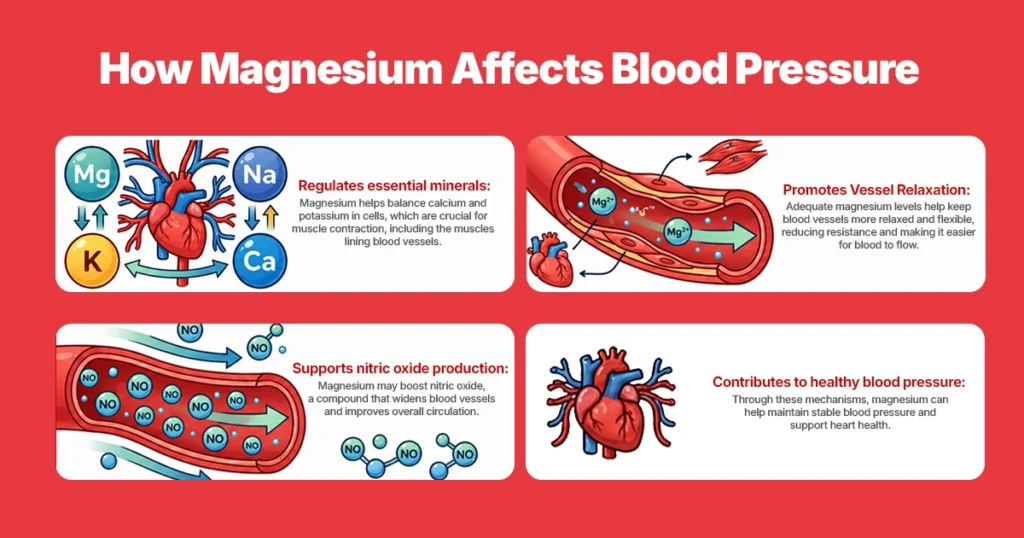
Magnesium plays a key role in cardiovascular health by supporting proper blood vessel function and circulation. Here’s how it works:
- Regulates essential minerals: Magnesium helps balance calcium and potassium in cells, which are crucial for muscle contraction, including the muscles lining blood vessels.
- Promotes vessel relaxation: Adequate magnesium levels help keep blood vessels more relaxed and flexible, reducing resistance and making it easier for blood to flow.
- Supports nitric oxide production: Magnesium may boost nitric oxide, a compound that widens blood vessels and improves overall circulation.
- Contributes to healthy blood pressure: Through these mechanisms, magnesium can help maintain stable blood pressure and support heart health.
These effects make magnesium a valuable nutritional approach for people looking to manage hypertension naturally, especially when combined with lifestyle and medical guidance, and if symptoms become severe, it is important to visit an emergency room near me.
Is Magnesium Good for High Blood Pressure?
Magnesium plays a supportive role in maintaining healthy blood pressure. By helping blood vessels relax, regulating muscle and nerve function, and balancing key electrolytes like calcium and potassium, magnesium may reduce strain on the cardiovascular system. Research suggests that people with low magnesium levels may see modest reductions in both systolic and diastolic blood pressure when magnesium intake is increased through diet or supplements.
Key benefits of magnesium for high blood pressure include:
- Supports vascular relaxation: Helps arteries remain flexible for smoother blood flow.
- Balances electrolytes: Regulates calcium, potassium, and sodium levels to support normal circulation.
- May lower blood pressure modestly: Particularly effective for those with magnesium deficiency or poor dietary intake.
- Works best with lifestyle strategies: Most effective when combined with a heart-healthy diet, regular exercise, stress management, and prescribed medications if needed.
Important: Magnesium should not replace prescribed blood pressure medications. Always consult a healthcare provider before starting supplementation, especially if you are already taking hypertension drugs.
Best Sources of Magnesium for Blood Pressure
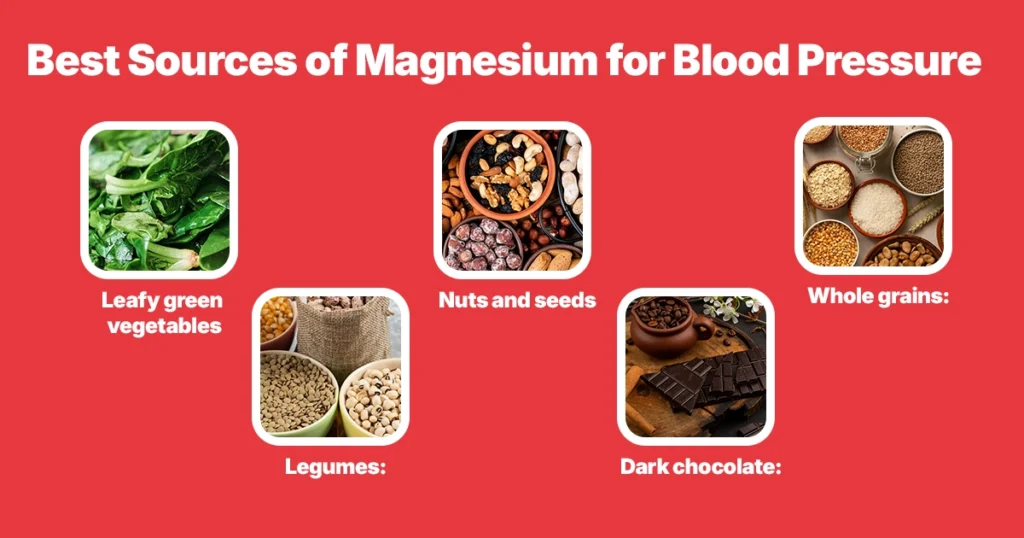
Getting enough magnesium through food is often the safest and most effective way to support overall health. Many nutrient-rich foods naturally contain magnesium and can help maintain adequate levels.
Common magnesium-rich foods include:
- Leafy green vegetables: Spinach, kale, and Swiss chard are excellent sources of magnesium.
- Nuts and seeds: Almonds, pumpkin seeds, and cashews provide significant amounts of this mineral.
- Whole grains: Brown rice, quinoa, and whole wheat products contribute to daily magnesium intake.
- Legumes: Black beans, lentils, and chickpeas are good plant-based sources.
- Dark chocolate: Moderate amounts of high-cocoa dark chocolate contain magnesium and antioxidants.
Including these foods regularly can naturally support magnesium and blood pressure balance while also providing other nutrients that benefit heart health.
Magnesium Supplements for Blood Pressure
In some cases, dietary intake alone may not provide enough magnesium, making supplements a useful option for supporting healthy blood pressure. Key points to know about magnesium supplements:
- Forms of Magnesium:
- Magnesium citrate: Easily absorbed, often recommended for supplementation.
- Magnesium glycinate: Gentle on the stomach, high bioavailability.
- Magnesium oxide: Less well absorbed but sometimes used for cost-effectiveness.
- Magnesium citrate: Easily absorbed, often recommended for supplementation.
- Benefits for Blood Pressure:
- Supports blood vessel relaxation.
- Helps maintain electrolyte balance, including calcium and potassium.
- May contribute to modest reductions in both systolic and diastolic blood pressure for those with low magnesium levels.
- Supports blood vessel relaxation.
- Safety Considerations:
- Excessive magnesium can cause diarrhea, nausea, or abdominal discomfort.
- Supplements can interact with certain medications, including some blood pressure drugs.
- Always consult a healthcare provider to determine the correct dosage and ensure safe use.
- Excessive magnesium can cause diarrhea, nausea, or abdominal discomfort.
By choosing the right form and dose, magnesium supplements can be a helpful addition to a heart-healthy lifestyle when dietary intake is insufficient.
Factors That Influence Blood Pressure
Although magnesium plays a role in cardiovascular health, it is only one factor that influences blood pressure. Several lifestyle and health conditions can affect how well magnesium supports healthy circulation. Factors that may influence blood pressure include:
- Diet quality and nutrient balance
- Sodium intake levels
- Kidney function and mineral regulation
- Physical activity levels
- Stress and sleep patterns
Because blood pressure regulation involves many body systems, magnesium is most effective as part of a comprehensive approach that includes heart-healthy lifestyle habits.
Who Benefits Most
Certain individuals may benefit more from increasing magnesium intake. Research suggests that people with low dietary magnesium intake or certain health conditions may experience greater improvements when magnesium levels are corrected. Those who may benefit from magnesium for high blood pressure include:
- Individuals with magnesium deficiency
- People consuming diets low in whole foods
- Older adults with reduced nutrient absorption
- Individuals with metabolic conditions affecting mineral balance
In these cases, improving magnesium intake through food or carefully monitored magnesium supplements may support overall cardiovascular health.
When to Go to the ER
While magnesium can support heart health, dangerously high blood pressure may require immediate medical attention. Seek emergency care if you experience any of the following warning signs:
- Severe or persistent chest pain or pressure
- Shortness of breath or difficulty breathing
- Intense headache, dizziness, or blurred vision
- Confusion, weakness, or numbness on one side of the body
- Rapid or irregular heartbeat
- Swelling in the face, hands, or extreme fatigue
These symptoms may indicate a hypertensive crisis, stroke, or other cardiovascular emergency. Prompt evaluation at an emergency facility is crucial to prevent serious complications and protect heart health.
Expert Care at Texas Emergency Care Center
At Texas Emergency Care Center, patients experiencing high blood pressure spikes receive specialized, rapid care from cardiovascular-trained experts. Our team provides:
- Comprehensive evaluation: Immediate assessment of blood pressure levels and risk factors
- Personalized treatment plans: Medication management and lifestyle recommendations tailored to your condition
- 24/7 emergency support: Rapid interventions for hypertensive crises, heart attacks, and stroke prevention
- Safe monitoring of supplements: Guidance on magnesium and other nutritional strategies in conjunction with medical care
Early intervention is key. Combining professional treatment with lifestyle adjustments and magnesium support can reduce risks and help maintain long-term cardiovascular health.
Key Takeaways
- Magnesium May Support Blood Pressure Regulation: Magnesium helps relax blood vessels and improve circulation.
- Magnesium and Blood Pressure Are Closely Linked: Adequate magnesium intake supports cardiovascular function and healthy blood vessel activity.
- Diet is an Important Source: Magnesium-rich foods like leafy greens, nuts, and whole grains can help maintain healthy levels.
- Supplements May Help in Some Cases: Magnesium supplements for blood pressure may benefit individuals with a deficiency when used under medical guidance.
- Magnesium Supports but Does Not Replace Treatment: Managing hypertension typically requires a comprehensive approach, including lifestyle changes and medical care.
Frequently Asked Questions
Which magnesium is best for high blood pressure?
Magnesium glycinate and magnesium citrate are commonly recommended due to better absorption. They may help support healthy blood pressure levels. Always choose a form based on your doctor’s advice.
Is magnesium good for high blood pressure?
Magnesium may help relax blood vessels and improve circulation. This can support maintaining normal blood pressure levels. It’s often included in a heart-healthy diet.
Should I take magnesium supplements for blood pressure?
Magnesium supplements may benefit some individuals with low levels. However, they should only be taken after consulting a healthcare professional. Proper dosage and form are important for safety and effectiveness.