



Many people first notice something feels wrong when leg pain, swelling, or warmth suddenly appears and doesn’t go away. What Causes Blood Clots in Legs is a common health question, but blood clots in the legs can also become dangerous when symptoms are ignored.
A blood clot in the leg may quickly turn into a medical emergency if it travels to the lungs and affects breathing. Symptoms like sudden swelling, redness, chest pain, or shortness of breath should never be ignored. Seeking immediate care at our ER in Pearland for blood clot symptoms can help reduce the risk of life-threatening complications.
What Does A Blood Clot In The Leg Feel Like?
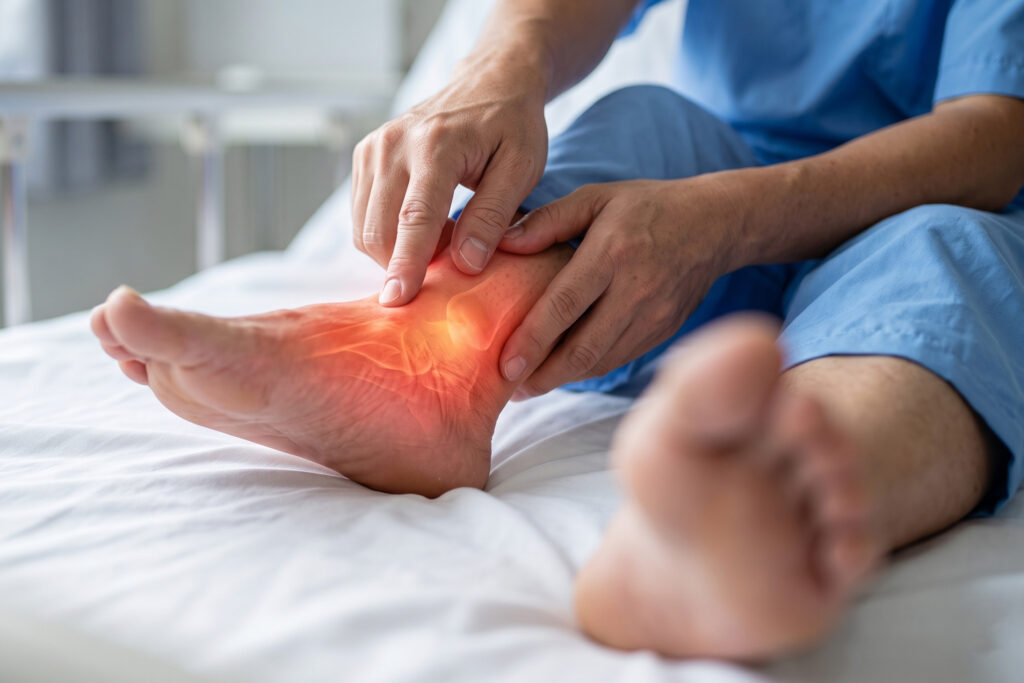
A blood clot in the leg, also known as deep vein thrombosis (DVT), often causes pain, cramping, swelling, or tenderness in one leg. Many people feel a heavy, tight, or warm sensation, especially in the calf or thigh, that may worsen with movement. The skin can look red or discolored and feel warm to the touch.
According to a PubMed study, about 35% of patients with asymptomatic lower extremities were still found to have deep vein thrombosis, showing that blood clots may sometimes develop with subtle or unnoticed symptoms.
Signs Of Blood Clot In Leg That You Should Never Ignore
- Sudden swelling in one leg, especially in the calf or thigh.
- Persistent leg pain or cramping that worsens while walking or standing.
- Warmth or redness over a specific area of the leg.
- Skin discoloration, including red, bluish, or pale patches on the leg.
- Sudden chest pain or shortness of breath, which may signal the clot has traveled to the lungs.
If you or a loved one experiences any of these symptoms, seek immediate medical attention at our ER for blood clot concerns, especially if symptoms are sudden, severe, or accompanied by chest pain or shortness of breath.
Causes Of Blood Clot In Leg
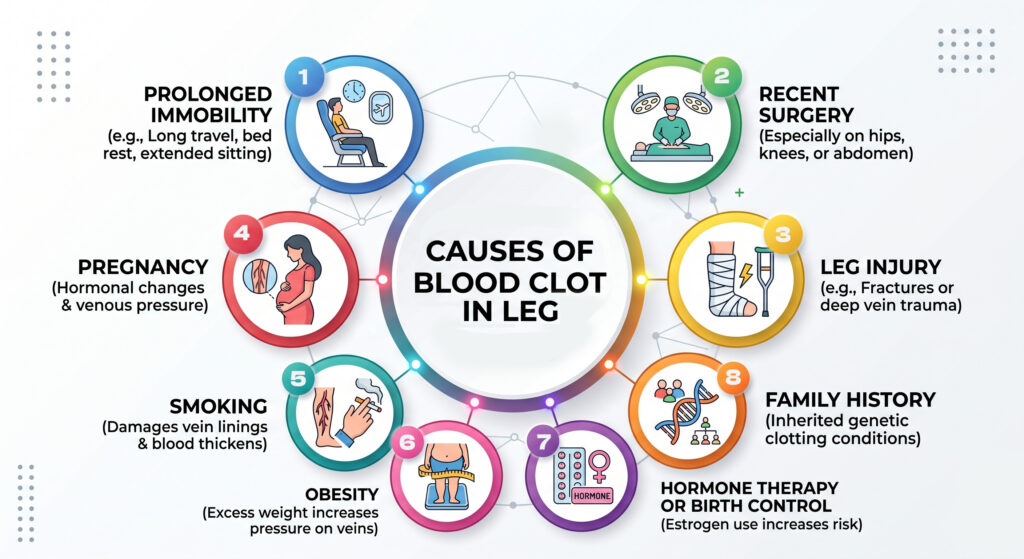
Discovering swelling, pain, or unusual discomfort in your leg can feel alarming, especially when symptoms appear suddenly without a clear reason. Blood clots in the legs are serious because they can interrupt normal blood flow and may lead to dangerous complications if left untreated.
1. Prolonged Sitting Or Immobility
Sitting for long periods during travel, office work, or bed rest can slow blood circulation in the legs. When blood moves too slowly, it becomes more likely to thicken and form clots inside the veins. People recovering from illness or surgery are especially at risk because they may remain inactive for extended periods.
2. Recent Surgery
Surgery can increase the risk of blood clots due to reduced movement and changes in blood flow during recovery. Procedures involving the hips, knees, abdomen, or legs are commonly linked with a higher risk of deep vein thrombosis. Inflammation after surgery may also make blood more likely to clot.
3. Injury To The Leg
An injury to the leg, such as a fracture, muscle tear, or severe bruise, can damage blood vessels and trigger clot formation. Swelling and reduced movement after an injury may further slow blood circulation in the affected area. Even minor injuries can sometimes increase clot risk in people with other underlying conditions.
4. Pregnancy
Pregnancy naturally increases pressure on the veins in the pelvis and legs, which can slow blood flow. Hormonal changes during pregnancy also make blood clot more easily to reduce bleeding during childbirth. The risk of blood clots may continue for several weeks after delivery.
5. Smoking
Smoking damages blood vessels and affects normal blood circulation, increasing the likelihood of clot formation. Chemicals in cigarettes can make blood thicker and more likely to stick together inside the veins. Smokers who also have other risk factors, such as obesity or birth control use, may face an even higher risk.
6. Obesity
Excess body weight places additional pressure on the veins, especially in the legs and pelvis. This pressure can slow blood flow and increase the chance of clot development over time. Obesity is also linked with inflammation and reduced physical activity, both of which can contribute to blood clot risk.
7. Birth Control Pills
Certain hormonal medications, including birth control pills and hormone replacement therapy, can increase clotting factors in the blood. This may raise the risk of developing deep vein thrombosis, especially in women who smoke or have a family history of clotting disorders. The risk may vary depending on the type of hormone used and individual health conditions.
8. Family History
Some people inherit genetic conditions that make their blood more likely to clot than normal. A family history of blood clots may increase the chances of developing deep vein thrombosis at a younger age. Certain clotting disorders can remain unnoticed until symptoms appear suddenly.
When To Go To The ER
A blood clot in the leg can quickly become life-threatening if it travels to the lungs and blocks blood flow. Symptoms may suddenly worsen within hours, making immediate medical attention extremely important.
- Sudden swelling in one leg that appears without injury.
- Severe leg pain, cramping, or tenderness that continues to worsen.
- Redness, warmth, or unusual discoloration in the affected leg.
- Sudden shortness of breath or difficulty breathing.
- Sharp chest pain, especially while breathing deeply or coughing.
- Rapid heartbeat, dizziness, or coughing up blood.
If you or your loved ones notice these symptoms, visit an ER near me immediately.
Treatment For Blood Clot In Leg
Hearing that you may have a blood clot in your leg can feel frightening, especially when symptoms suddenly worsen or affect daily movement. The right treatment depends on the size and severity of the clot and your overall health.
- Blood Thinners (Anticoagulants): Most doctors recommend medicines like heparin, warfarin, or apixaban to prevent the clot from growing and reduce the risk of new clots.
- Over-The-Counter Pain Relievers: Most doctors recommend acetaminophen for mild pain or discomfort. Some pain medicines may increase bleeding risk with blood thinners.
- Compression Stockings: These stockings improve blood flow and help reduce leg swelling, pain, and long-term vein damage.
- Clot-Dissolving Medications: Doctors may use strong medicines to quickly break down severe or life-threatening blood clots.
- Catheter-Directed Procedures: A thin tube may be used to deliver medicine directly into the clot for faster treatment in severe cases.
- IVC Filter Placement: Doctors may place a small filter in a vein to stop clots from reaching the lungs when blood thinners cannot be used.
- Walking And Gentle Movement: Light activity can improve circulation and lower the risk of additional clots forming.
- Leg Elevation: Raising the affected leg may help reduce swelling and discomfort caused by poor blood flow.
- Healthy Lifestyle Changes: Staying active, drinking water, maintaining a healthy weight, and avoiding smoking may help prevent future clots.
- Emergency Medical Care: Immediate treatment is needed if chest pain, breathing problems, or coughing up blood develops.
Blood Clot Treatment At Texas Emergency Care Center
Blood clots in the legs can become dangerous if symptoms are ignored or treatment is delayed. Understanding What Causes Blood Clots In Legs is important, especially when swelling, pain, or redness suddenly appears. Early medical care can help prevent serious complications. If you are concerned about symptoms, checking ER wait times can help you find an ER in Pearland with little to no wait for prompt evaluation and treatment.
At Texas Emergency Care Center, patients receive fast evaluation and urgent treatment for blood clot symptoms. The focus is on improving circulation, reducing complications, and stabilizing the condition quickly. Prompt care can help support safer recovery.
Key Takeaways
- Blood clots can be life-threatening if not treated early.
- Symptoms include swelling, pain, redness, warmth, and tenderness.
- Risk factors include sitting long hours, surgery, smoking, pregnancy, and obesity.
- Chest pain or shortness of breath may indicate an emergency.
- Treatments include blood thinners, stockings, and medical procedures.
- Early care helps prevent serious complications like pulmonary embolism.
FAQs
How To Check For A Blood Clot In Your Leg?
Watch for one-sided swelling, pain, redness, warmth, or heaviness in the leg. A confirmed diagnosis requires medical tests like an ultrasound.
Can You Feel A Blood Clot In Your Leg?
It may feel like deep pain, cramping, or tightness in one leg. In some cases, there are no noticeable symptoms at all.
Can a Bruise Cause a Blood Clot?
Yes, a severe bruise or injury can sometimes damage blood vessels and increase the risk of a blood clot, especially in people with other risk factors.
How to Tell If You Have a Blood Clot?
Common signs include swelling, pain, warmth, redness, or heaviness in one leg. A doctor may confirm it with an ultrasound or other imaging tests.