




A kidney infection can be painful, exhausting, and sometimes frightening when symptoms appear suddenly. Many people first notice urinary discomfort, fever, or back pain without understanding what is happening inside the body. If you are asking what causes kidney infections, it often means your body is already showing warning signs that should not be ignored.
In some cases, the infection can progress quickly and affect kidney function if not treated early. Severe symptoms such as high fever, vomiting, or strong back pain may require immediate medical attention at our ER in Pearland to help prevent complications like sepsis or kidney damage.
What Is a Kidney Infection?
A kidney infection, also known as pyelonephritis, is a type of urinary tract infection (UTI) that spreads from the bladder to one or both kidneys. It occurs when bacteria travel upward through the urinary system and begin to multiply in the kidneys, causing inflammation and pain.
According to the National Institutes of Health (NIH), research shows that approximately 40%–50% of women will develop a urinary tract infection during their lifetime, which can increase the risk of developing a kidney infection if the infection spreads upward to the kidneys.
Signs of Kidney Infection You Should Never Ignore
- High fever and chills.
- Pain in the lower back, side, or abdomen.
- Burning sensation while urinating.
- Frequent or urgent need to urinate.
- Cloudy, dark, or foul-smelling urine.
- Blood in the urine.
- Nausea and vomiting.
If you or a loved one experiences any of these symptoms, seek prompt medical attention at an ER for severe infection, especially if symptoms are severe, worsening, or accompanied by high fever, vomiting, or blood in the urine.
Causes of Kidney Infection
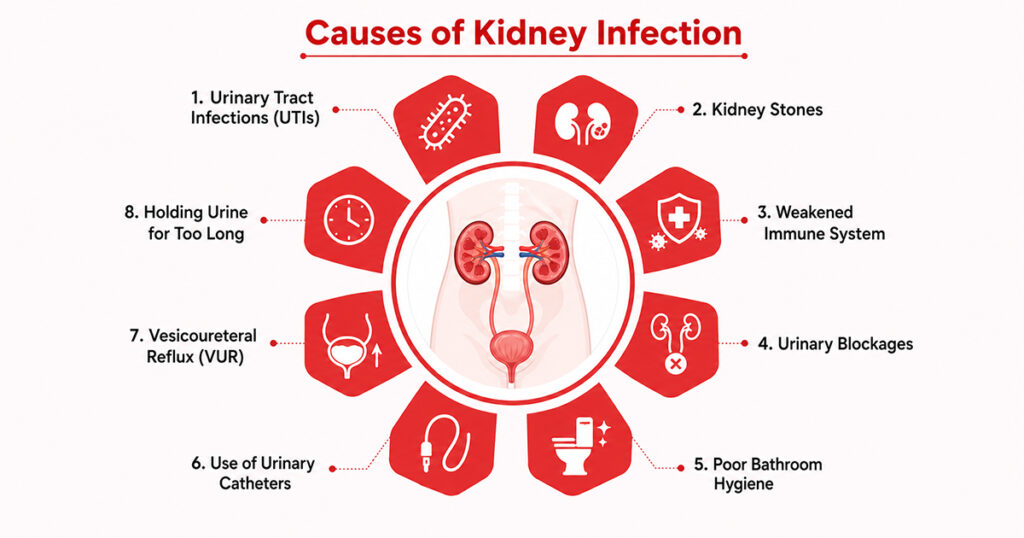
A kidney infection can develop quickly and become serious if the underlying cause is not treated early. Many people overlook early urinary symptoms, not realizing the infection may be spreading toward the kidneys. Understanding the risk factors can help you seek timely care and avoid complications like kidney damage or bloodstream infections.
1. Urinary Tract Infections (UTIs)
One of the most common causes of kidney infections is an untreated urinary tract infection. Bacteria can travel from the bladder through the urinary tract and reach the kidneys if treatment is delayed. Symptoms such as burning during urination, pelvic pain, or frequent urination should never be ignored.
2. Kidney Stones
Kidney stones can block the normal flow of urine, creating an environment where bacteria can grow more easily. When urine becomes trapped, bacteria may multiply and increase the risk of infection inside the kidneys. People with recurring kidney stones may be more likely to experience repeated kidney infections.
3. Weakened Immune System
A weakened immune system can make it harder for the body to fight off harmful bacteria and infections. Conditions such as diabetes, cancer treatments, or autoimmune disorders may increase the risk of kidney infections. Even a minor urinary infection can become more severe when the immune system is compromised.
4. Urinary Blockages
Any blockage in the urinary tract can prevent urine from leaving the body properly and raise the risk of infection. Enlarged prostate, tumors, or structural abnormalities may cause urine to back up into the kidneys. This stagnant urine allows bacteria to multiply more rapidly.
5. Poor Bathroom Hygiene
Improper hygiene habits may allow bacteria to enter the urinary tract and travel toward the kidneys. This is especially common when bacteria from the digestive tract spread to the urethra. Maintaining proper hygiene and washing regularly can help reduce the risk of urinary infections.
6. Use of Urinary Catheters
Urinary catheters can sometimes introduce bacteria into the urinary tract, especially when used for long periods. Hospitals and healthcare settings carefully monitor catheter use because of the infection risk involved. People with catheters may develop urinary symptoms more easily if bacteria enter the bladder.
7. Vesicoureteral Reflux (VUR)
Vesicoureteral reflux is a condition where urine flows backward from the bladder toward the kidneys. This backward flow can carry bacteria into the kidneys and increase the risk of infection. VUR is more common in children but can also affect adults. Early diagnosis and treatment may help prevent long-term kidney complications.
8. Holding Urine for Too Long
Frequently delaying urination may allow bacteria more time to grow inside the bladder. Over time, this can increase the risk of urinary tract infections that may spread to the kidneys. Emptying the bladder regularly helps remove harmful bacteria from the body. Healthy bathroom habits can play an important role in preventing infections.
Kidney Infection Symptoms in Women
Women are at higher risk of kidney infections due to anatomical factors. Symptoms can develop quickly and should not be ignored. Recognizing the warning signs early can help prevent complications and support faster treatment.
- Painful Urination: Burning or discomfort while urinating is a common early symptom of infection.
- Frequent Urination: Feeling the need to urinate often, even with little urine output, may signal a kidney infection.
- Fever and Chills: A high fever with chills can indicate the infection has reached the kidneys.
- Back or Side Pain: Pain in the lower back or side is a common sign of kidney inflammation.
- Cloudy or Strong-Smelling Urine: Changes in urine color or smell may suggest bacteria in the urinary tract.
- Blood in the Urine: Pink, red, or dark urine can occur when the urinary tract becomes irritated.
- Nausea and Vomiting: Severe infections may cause stomach discomfort, nausea, or vomiting.
- Fatigue: Kidney infections can leave you feeling weak, tired, and drained of energy.
If you are a woman experiencing any of these symptoms, visit an emergency room near me as soon as possible. Kidney infections can progress quickly, and early treatment can help prevent serious complications.
How to Test for Kidney Infection
Testing for a kidney infection usually involves checking your symptoms, urine, and overall health to confirm whether bacteria have spread to the kidneys. Doctors may use one or more tests depending on the severity of symptoms and your medical history.
- Urine Test: A urine sample is checked for bacteria, blood, or white blood cells that may indicate a kidney infection.
- Urine Culture: This test identifies the exact bacteria causing the infection and helps doctors choose the most effective antibiotic.
- Physical Examination: A doctor checks for fever, back or flank pain, and tenderness around the kidneys.
- Blood Tests: These tests detect signs of infection and determine whether it has spread into the bloodstream.
- Imaging Tests: Ultrasound or CT scans help identify kidney stones, blockages, or structural issues.
- Symptom Review: Doctors evaluate symptoms like fever, pain, nausea, and urinary changes to assess severity.
- Kidney Function Tests: These tests measure how well the kidneys are working and detect possible damage.
- Emergency Evaluation: Severe symptoms such as high fever, vomiting, confusion, or dehydration may require immediate ER testing and treatment.
When to Go to the ER
A kidney infection can become dangerous if symptoms worsen or spread beyond the urinary tract. Mild cases may respond to antibiotics, but severe symptoms often need emergency care. Early treatment helps prevent complications like kidney damage or sepsis and supports faster recovery.
- High or persistent fever.
- Severe back or side pain.
- Vomiting or inability to keep fluids down.
- Blood in urine.
- Confusion or dizziness.
- Difficulty urinating.
If you or a loved one experiences any of these symptoms, don’t delay seeking care. Visit our 24/7 emergency room immediately.
Kidney Infection Treatment
Kidney infection treatment focuses on killing the bacteria, relieving symptoms, and preventing complications like kidney damage or sepsis. Most cases require medical care, and early treatment improves recovery outcomes. The exact approach depends on infection severity and overall health.
- Antibiotics: Oral or intravenous antibiotics prescribed by the doctor are the primary treatment for kidney infections and help kill the bacteria causing the infection.
- Hospitalization (Severe Cases): In serious infections, hospital care may be required, where IV fluids and antibiotics prescribed by the doctor are given for faster recovery.
- Pain Relief Medication: Pain relievers prescribed by the doctor may be used to reduce fever, back pain, and overall discomfort.
- Hydration Therapy: Increased fluid intake or IV fluids prescribed by the doctor help flush bacteria from the urinary system and prevent dehydration.
- Urine Culture Monitoring: Repeated urine tests ordered by the doctor may be done to ensure the infection is clearing properly.
- Treatment of Underlying Causes: Conditions like kidney stones or blockages may require procedures recommended by the doctor to prevent recurring infections.
- Rest and Recovery: Adequate rest is advised to help the immune system fight the infection effectively.
- Follow-Up Care: Follow-up visits with a healthcare provider are important to confirm that the infection has completely resolved.
Kidney Infection Care at Texas Emergency Care Center
A kidney infection can become serious quickly if symptoms are ignored or worsen over time. Understanding what causes kidney infections helps, but prompt medical attention is essential when pain, fever, or urinary symptoms appear.
At Texas Emergency Care Center, patients receive fast evaluation and urgent treatment for kidney infection symptoms. The focus is on controlling infection, relieving pain, and stabilizing the condition. Immediate care helps reduce the risk of complications like kidney damage or sepsis.
Key Takeaways
- Kidney infections are serious and can spread if not treated early.
- Fever, back pain, and painful urination are key warning signs.
- Most cases start from untreated UTIs.
- Women have a higher risk of developing kidney infections.
- Diagnosis includes urine, blood, and imaging tests.
- Severe cases may require emergency care to prevent sepsis.
- Treatment includes antibiotics prescribed by a doctor.
FAQs
How fast can a kidney infection kill you?
A kidney infection can become life-threatening within 24 to 72 hours if it spreads to the bloodstream and leads to sepsis. This is why early treatment is critical.
What does a kidney infection feel like?
A kidney infection often feels like sharp or dull pain in the lower back or side, along with fever, chills, fatigue, and painful urination. Some people also feel nausea or vomiting.
How do I know if I have a kidney infection?
You may have a kidney infection if you experience fever, back pain, frequent urination, burning while urinating, or cloudy urine. A doctor confirms it through urine and blood tests.
Can kidney stones cause a bladder infection?
Yes, kidney stones can increase the risk of bladder infections by blocking urine flow and allowing bacteria to grow, which can lead to infection spreading in the urinary tract.