




Waking up with a sore, scratchy throat can feel uncomfortable, exhausting, and disruptive, especially when swallowing or speaking becomes painful. In many cases, throat irritation starts mildly but can progress throughout the day and affect daily comfort and hydration. While most cases are not serious, some may indicate an underlying condition that requires medical attention. Recognizing early throat discomfort and monitoring its progression is important for timely care.
If it starts to get worse instead of better or begins making it difficult to eat, drink, or breathe comfortably, it is important not to wait. Visit our emergency room for sore throat or seek urgent medical attention right away.
What Is a Sore Throat?
A sore throat is a condition where the throat becomes irritated, inflamed, or painful, often making swallowing, talking, or breathing feel uncomfortable. It is one of the most common reasons for urgent care visits and usually resolves within a few days without complications.
According to the U.S. National Library of Medicine, around 70% to 90% of acute cases are self-limiting and resolve without specific medical treatment, reflecting its generally mild and temporary nature (NCBI).
Sore Throat Symptoms That May Be Dangerous
- Severe throat pain that worsens or does not improve over time.
- Difficulty breathing or sensation of airway tightening.
- Inability to swallow liquids, food, or saliva.
- High fever that persists or returns despite medication.
- Swelling in the neck or visible lump formation.
If you or a loved one experiences any of these symptoms, don’t delay seeking care. Visit urgent care near me immediately.
Causes Of Sore Throat
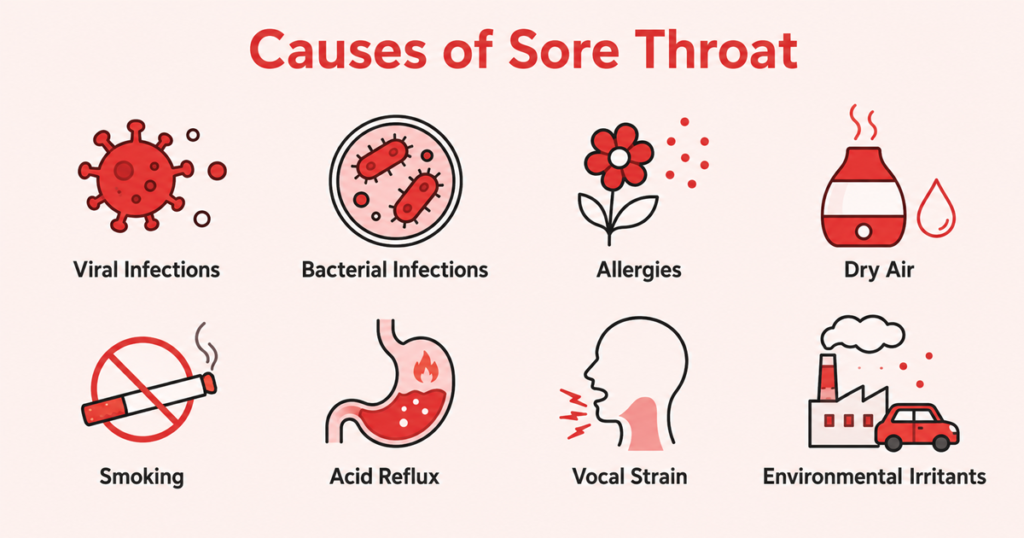
A sore throat can develop from several internal and external factors that irritate or inflame the throat lining. It is a very common condition affecting both adults and children, and in most cases, it is temporary. However, understanding possible causes helps identify when symptoms may require medical attention. Below are the most common and clinically relevant causes.
1. Viral Infections
Viral infections are one of the most frequent reasons behind a sore throat. They often spread easily from person to person through everyday contact or air droplets. These infections typically affect the upper respiratory system, leading to throat irritation. Most cases improve on their own without specific medical treatment.
2. Bacterial Infections
Bacterial infections can also lead to throat discomfort and are less common than viral ones. They may cause more intense and persistent irritation in some cases. These infections sometimes require medical evaluation to confirm and treat properly. Early attention helps prevent complications.
3. Allergies
Allergic reactions can trigger throat irritation when the body reacts to dust, pollen, or other allergens. This reaction can lead to ongoing discomfort that may come and go. Environmental exposure often plays a key role in how symptoms develop. Managing triggers is important for relief.
4. Dry Air
Dry air can leave the throat feeling rough and irritated, especially in indoor environments with low humidity. This is more noticeable during seasonal changes or in air-conditioned spaces. The lack of moisture affects the throat lining directly. Staying hydrated and improving air quality can help reduce discomfort.
5. Smoking
Smoking can irritate and inflame the throat due to exposure to harmful chemicals. Even secondhand smoke can have a similar effect over time. The irritation may become more noticeable with frequent exposure. Reducing or avoiding smoke exposure is important for throat health.
6. Acid Reflux
Acid reflux can cause throat irritation when stomach acid moves upward into the esophagus. This often leads to a burning or uncomfortable sensation. It may occur more frequently after eating or lying down. Managing diet and lifestyle habits can help reduce episodes.
7. Vocal Strain
Overuse of the voice can lead to temporary throat discomfort. This is common in people who speak loudly or for long periods. The strain affects the vocal cords and surrounding tissues. Resting the voice usually helps recovery.
8. Environmental Irritants
Exposure to pollution, strong chemicals, or fumes can irritate the throat lining. These irritants are often found in workplaces or urban environments. The effect may vary depending on exposure level and sensitivity. Reducing contact with irritants can help protect throat health.
Sore Throat in Kids
A sore throat in children can be concerning because they may not clearly describe their symptoms. It can affect eating, drinking, sleep, and overall comfort. Most cases are mild and temporary, but children should be closely monitored for worsening symptoms or dehydration. Early attention helps prevent complications and ensures proper care.
Sore Throat Medicine for Kids
- Acetaminophen (Paracetamol), prescribed by the doctor for pain and fever relief.
- Ibuprofen, prescribed by the doctor to reduce pain and inflammation.
- Antibiotics such as Amoxicillin, prescribed by the doctor if a bacterial infection is confirmed.
- Pediatric throat lozenges or sprays, prescribed by the doctor for temporary soothing relief.
- Antihistamines, prescribed by the doctor if allergies are contributing to throat irritation.
If symptoms become severe or urgent, visit the nearest emergency room for proper medical care.
When to Go to the ER for a Sore Throat
A sore throat is usually mild, but certain symptoms may indicate a more serious condition that requires immediate medical care. It is important not to ignore worsening or unusual changes, especially when basic functions like breathing or swallowing become difficult. Early emergency evaluation can help prevent complications.
- Severe difficulty breathing or feeling short of breath.
- Inability to swallow liquids or saliva.
- Rapidly worsening throat pain that does not improve.
- High fever that does not respond to medication.
- Swelling in the neck or visible enlargement of throat structures.
- Muffled or abnormal voice changes that appear suddenly.
- Stiff neck along with throat discomfort.
- Signs of dehydration such as a very dry mouth or reduced urination.
How to Treat Sore Throat
Most sore throats improve within a few days with proper care and rest. The goal of treatment is to reduce discomfort, support healing, and prevent worsening symptoms. Hydration and symptom management play a key role in recovery. In some cases, medical treatment may be required depending on severity and cause.
- Drinking warm fluids like tea or soup to soothe throat irritation.
- Gargling with warm salt water to help reduce discomfort.
- Using pain relievers such as acetaminophen, prescribed by the doctor if needed.
- Taking ibuprofen, prescribed by the doctor to reduce pain and inflammation.
- Using throat lozenges or sprays, prescribed by the doctor for temporary relief.
- Resting the voice to prevent further strain on the throat.
- Using a humidifier to keep the air moist and reduce irritation.
- Taking antibiotics, prescribed by the doctor only if a bacterial infection is confirmed.
Sore Throat Care at Texas Emergency Care Center
A sore throat can range from mild irritation to a more serious condition that requires urgent medical evaluation. While many cases resolve naturally, worsening symptoms should never be ignored, especially when breathing, swallowing, or hydration becomes difficult. Understanding early warning signs and seeking timely care is essential for safe recovery.
At Texas Emergency Care Center, patients receive fast, professional, and compassionate care for sore throat emergencies. Our medical team is equipped to evaluate severe symptoms, manage pain, and identify any underlying conditions that require immediate treatment. Prompt medical attention can reduce complications and support faster recovery.
Key Takeaways
- A sore throat is a common condition that usually improves on its own with proper care.
- Most cases are temporary, but some situations may require medical evaluation.
- Symptoms can range from mild discomfort to more severe throat pain affecting daily activities.
- Staying hydrated, resting, and using simple home care can help support recovery.
- Medical attention is important if symptoms become severe, persistent, or worsen over time.
Frequently Asked Questions
How Long Does a Sore Throat Last?
A sore throat often lasts around 3–7 days when it is caused by a viral infection. In most cases, it gradually improves with basic care and rest. If it lasts longer than a week or becomes more severe, it should be checked by a healthcare professional. Persistent discomfort may indicate a need for further evaluation.
What Helps a Sore Throat?
Simple home care can often ease throat discomfort and support recovery. Warm fluids, saltwater gargles, rest, and throat lozenges are commonly used for relief. Staying well-hydrated is also important for healing. These measures help reduce irritation and make symptoms more manageable.
Can Allergies Cause a Sore Throat?
Yes, allergies can contribute to throat irritation over time. This usually happens when mucus from the nose drips down the throat, causing ongoing discomfort. The irritation may come and go depending on exposure to allergens.
Does Tylenol Help With a Sore Throat?
Tylenol (acetaminophen) can help relieve pain and reduce fever associated with a sore throat. It provides symptom relief but does not treat the underlying cause. It is important to use it as directed and seek medical advice if symptoms persist. In some cases, additional treatment may be needed.