




A urinary tract infection (UTI) is a common infection that affects the urinary system, including the bladder, urethra, and sometimes the kidneys. While most people associate UTIs with symptoms like burning during urination and frequent bathroom trips, many are surprised to learn that UTIs can also cause nausea.
Understanding how UTIs affect the body and when symptoms become serious is important for timely treatment. In severe cases, especially when infection spreads, patients may need urgent care at an emergency room for UTI treatment, such as an ER near me or a facility like Texas Emergency Care Center.
What Is a UTI?
A UTI (urinary tract infection) occurs when bacteria enter the urinary system and begin to multiply. Most UTIs are caused by bacteria such as E. coli, which normally live in the intestines but can enter the urinary tract. This infection can affect different parts of the urinary tract, including:
- Bladder (cystitis)
- Urethra (urethritis)
- Kidneys (pyelonephritis)
What Is Nausea?
Nausea is the uncomfortable sensation of feeling like you need to vomit. It is not a condition itself but a symptom of many different health issues, including infections, digestive problems, and even dehydration.
Symptoms associated with nausea may include:
- Stomach discomfort
- Loss of appetite
- Sweating
- Dizziness
- Vomiting (in some cases)
Can a UTI Cause Nausea?
Yes, a UTI can cause nausea, especially when the infection becomes more severe or spreads to the kidneys. While mild bladder infections usually cause urinary symptoms such as burning during urination or frequent urination, more advanced infections can begin affecting the entire body. As the infection progresses, the immune system responds aggressively, which may lead to symptoms like nausea, fatigue, fever, chills, and vomiting.
When a UTI remains limited to the bladder, nausea may not always occur. However, if the infection travels upward into the kidneys, a condition known as pyelonephritis nausea becomes much more common. Kidney infections are more serious and can cause inflammation, dehydration, and systemic illness that affects digestion and overall body function.
Nausea from a UTI may be caused by:
- The body’s immune response to infection
- Kidney involvement
- Fever and dehydration
- Bacterial toxins in the bloodstream
In some cases, nausea may be accompanied by back pain, side pain, high fever, vomiting, or weakness. These symptoms can indicate that the infection is worsening and may require urgent medical treatment to prevent complications such as kidney damage or sepsis.
What Causes Nausea?
Nausea can be caused by many different conditions. Because nausea is a broad symptom, it is important to look at other accompanying nausea causes and signs to determine the root cause. including:
- Infections (such as UTIs or stomach viruses)
- Food poisoning
- Dehydration
- Medications
- Pregnancy
- Kidney infections
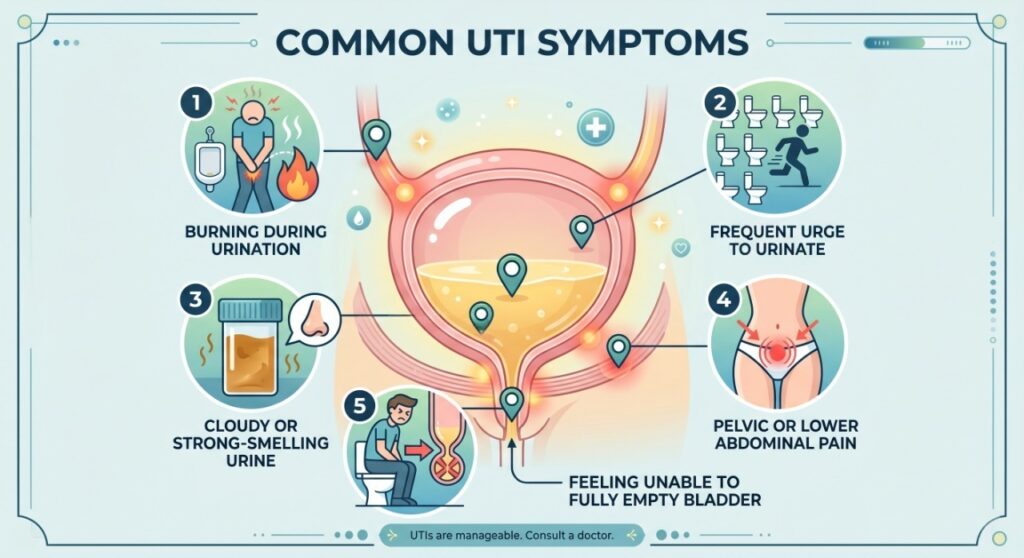
What Causes a UTI?
UTIs are usually caused by bacteria entering the urinary tract. Women are generally more prone to UTIs due to anatomy, but men can also develop them. Common causes include:
- Improper wiping after using the bathroom
- Sexual activity
- Holding urine for too long
- Poor hygiene practices
- Catheter use in medical settings
How to Get Rid of Nausea from UTI?
Treating the underlying UTI is the most effective way to relieve nausea. Once the infection is controlled, nausea typically improves. Common treatment approaches include:
- Antibiotics prescribed by a doctor
- Staying hydrated
- Resting the body
- Eating light, bland foods
- Taking prescribed anti-nausea medication if needed
When to Go to the ER for a UTI?
Most UTIs can be treated with antibiotics, but some cases require emergency care. You should go to the ER if you experience:
- High fever or chills
- Severe nausea or vomiting
- Pain in the back or sides
- Confusion or weakness
- Inability to keep fluids down
- Symptoms that worsen despite treatment
These signs may indicate that the infection has reached the kidneys or entered the bloodstream, which can become serious quickly.
In such situations, visiting an emergency facility like an ER near me or Texas Emergency Care Center is important for fast diagnosis and treatment.
Emergency Room for UTI Treatment
The emergency room can provide immediate care for severe UTIs. Treatment may include:
- IV antibiotics
- Pain and fever management
- Fluids for dehydration
- Diagnostic urine and blood tests
- Imaging if kidney infection is suspected
Know When to Seek Emergency Care
So, can a UTI cause nausea? Yes, especially when the infection becomes more severe or spreads to the kidneys. While mild UTIs may only cause urinary discomfort, advanced infections can affect the entire body and lead to symptoms such as nausea, vomiting, fever, chills, and severe back pain.
It’s important not to delay treatment if symptoms worsen or new symptoms develop. Nausea combined with fever, side pain, weakness, or difficulty keeping fluids down may signal a serious kidney infection that requires immediate medical attention. Early diagnosis and treatment can help prevent dangerous complications like kidney damage or sepsis.
If symptoms become severe or overwhelming, seeking urgent care at a nearby emergency facility such as Texas Emergency Care Center can help ensure fast evaluation, proper treatment, and timely relief.
Key Takeaways
- A UTI can cause nausea, especially if the infection spreads to the kidneys.
- Mild UTIs usually cause urinary symptoms, while severe infections may affect the whole body.
- Fever, back pain, vomiting, and chills may signal a serious kidney infection.
- Antibiotics, hydration, and rest are common treatments for UTI-related nausea.
- Severe symptoms may require emergency care to prevent complications like sepsis or kidney damage.
Frequently Asked Questions
Can a urinary tract infection (UTI) make you feel sick?
Yes, a UTI can make you feel generally unwell, especially if the infection worsens. Symptoms may include fatigue, fever, chills, and a feeling of overall weakness in addition to urinary discomfort. If symptoms progress, it may indicate that the infection is becoming more serious and needs medical attention.
How do you know if a UTI has spread to your kidneys?
If a UTI spreads to the kidneys, symptoms often become more severe and systemic. You may experience back or side pain, high fever, nausea, or vomiting along with urinary symptoms. This condition, known as a kidney infection, requires prompt medical treatment to prevent complications.
What causes a UTI in women?
UTIs in women are commonly caused by bacteria entering the urinary tract through the urethra. Factors like poor hygiene, sexual activity, dehydration, and holding urine for long periods can increase risk. Women are more prone due to a shorter urethra, which allows bacteria to reach the bladder more easily.