



Knee pain is very common in the U.S., affecting people of all ages. According to the CDC, nearly 1 in 5 adults has arthritis, and the knee is one of the most affected joints because it supports body weight and constant movement.
Pain may come from injury, arthritis, inflammation, or overuse. In severe or persistent cases, visiting the ER in Pearland can help prevent complications like joint damage or infection. This blog explains the main causes of knee joint pain, including sudden pain and inflammation.
Causes of Knee Pain
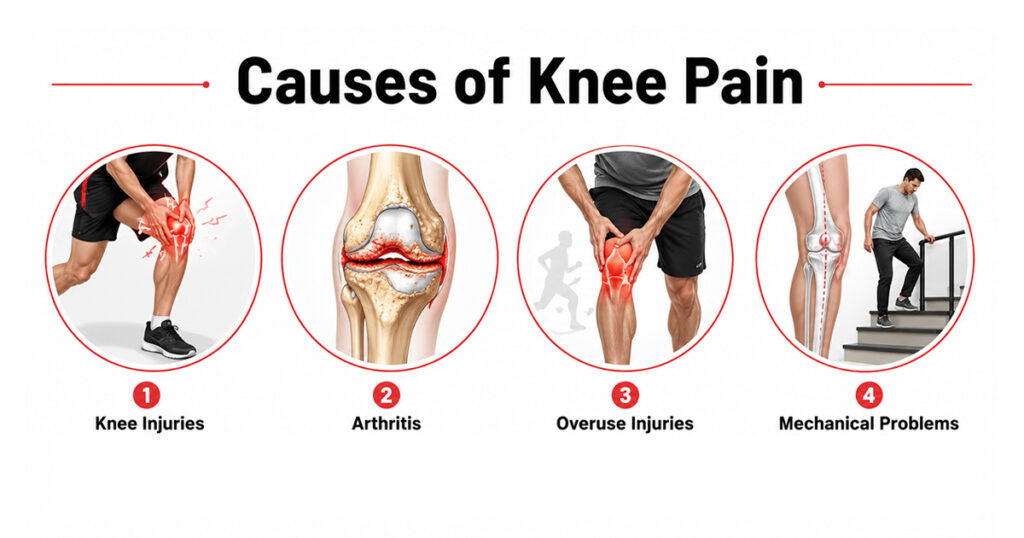
Knee pain can originate from several structures in the joint, including ligaments, cartilage, tendons, bones, and fluid sacs. In most cases, causes fall into four major categories:
- Injuries
- Arthritis and degenerative conditions
- Overuse or repetitive strain
- Mechanical or structural problems
According to the National Institute of Arthritis and Musculoskeletal and Skin Diseases (NIAMS), osteoarthritis is the most common cause of chronic knee pain in adults, while injuries are the leading cause in younger individuals. Let’s explore each category in detail.
1. Knee Injuries
Sudden or sharp knee pain often results from injury. This is common in sports, accidents, or sudden twisting movements. Injuries may affect ligaments, cartilage, tendons, or bones around the knee joint and often lead to swelling, instability, and difficulty moving the leg.
1. ACL Injury (Anterior Cruciate Ligament Tear)
An ACL injury is one of the most serious causes of sudden knee pain and commonly occurs during sports or abrupt directional changes. It involves tearing of the ligament that stabilizes the shinbone and thighbone.
This condition is frequently seen in basketball, football, and soccer players due to rapid pivoting and jumping movements that place stress on the knee joint. In many cases, it is associated with immediate instability and difficulty continuing activity.
2. Meniscus Tear
A meniscus tear occurs when the cartilage cushioning the knee joint is damaged, usually from twisting the knee while bearing weight. It is a major source of knee inflammation and long-term discomfort.
This condition may affect either the inner or outer meniscus, leading to localized discomfort such as pain on the side of the knee or deeper joint pain. It often develops gradually or after a sudden twisting motion.
3. Fractures and Sprains
A knee fracture or sprain is a common cause of knee pain and often occurs after a fall, sports injury, accident, or direct impact. A fracture is a break in one of the knee bones, while a sprain occurs when the knee ligaments are stretched or torn.
Both injuries can cause pain, swelling, bruising, and difficulty bearing weight. Prompt diagnosis and treatment can support healing and help prevent long-term joint problems.
2. Arthritis
Arthritis is one of the most common reasons people ask why my knees hurt, especially in adults over 40. It is a major cause of long-term knee inflammation and gradual joint stiffness.
Several types of arthritis affect the knee, each with different causes and symptoms. The most common include osteoarthritis, rheumatoid arthritis, gout, pseudogout, and septic arthritis, all of which can contribute to chronic or sudden knee pain depending on the condition.
1. Osteoarthritis
Osteoarthritis develops gradually as the protective cartilage that cushions the knee joint wears away over time. Aging, excess body weight, and years of repeated stress on the joint are the main factors that contribute to this process. As the cartilage breaks down, the bones begin to rub against each other, causing knee pain, stiffness, and swelling. Over time, osteoarthritis can limit joint flexibility, reduce mobility, and make everyday activities more difficult.
2. Rheumatoid Arthritis
Rheumatoid arthritis is an autoimmune condition where the immune system mistakenly attacks the joint lining, leading to inflammation and swelling. Unlike osteoarthritis, it can affect multiple joints at once and often occurs in flare-ups. It is strongly associated with persistent knee inflammation, stiffness, and long-term joint damage if not managed properly.
3. Gout and Crystal Arthritis
Gout occurs when uric acid crystals build up in the joint, triggering sudden and severe inflammation. It often causes sudden knee pain, intense swelling, and sharp discomfort that appears without warning. Many patients describe it as throbbing knee pain that worsens quickly and may require urgent medical attention.
4. Pseudogout (Calcium Crystal Arthritis)
Pseudogout is similar to gout but occurs when calcium crystals form in the joint fluid. It commonly affects older adults and can cause sudden flare-ups. It leads to swelling, stiffness, warmth, and episodes of acute discomfort that can mimic gout or infection. It is another important cause of knee inflammation and sudden joint pain.
5. Septic Arthritis (Joint Infection)
Septic arthritis is a serious infection inside the knee joint that can cause rapid joint damage if not treated quickly. It often develops suddenly and may occur without any injury. It requires urgent medical attention due to the risk of permanent cartilage damage and severe joint dysfunction.
3. Overuse Injuries
Overuse injuries are a common cause of knee inflammation and ongoing discomfort, especially in people who run, cycle, squat frequently, or perform repetitive physical work. These conditions often develop gradually without a clear injury.
1. Bursitis
Bursitis occurs when the small fluid-filled sacs (bursae) in the knee become irritated or inflamed. These sacs normally reduce friction between bones, tendons, and muscles, but repeated pressure can cause pain and swelling. This condition is commonly linked with pain on the side of the knee, tenderness, and discomfort that worsens with kneeling or pressure on the joint.
2. Tendinitis
Tendinitis is inflammation of the tendons caused by repetitive motion or overuse. It is especially common in athletes and individuals who perform high-impact activities. It is frequently seen in runners, cyclists, and jumping or sprinting athletes. It typically causes dull aching pain that worsens during activity and improves with rest.
4. Mechanical Problems
Mechanical issues within the knee joint occur when normal movement or structure is disrupted. These problems can cause knee pain even without a major injury and often lead to recurring discomfort, stiffness, or instability.
1. Misalignment
When the kneecap does not move properly within its groove, it can cause friction and pain at the front or side of the knee. This misalignment often makes activities such as climbing stairs, squatting, or standing up from a seated position painful and difficult.
2. Cartilage Damage
Damage or gradual wear of cartilage reduces the smooth cushioning inside the knee joint. This leads to increased friction between bones, which can cause grinding sensations, stiffness, swelling, and progressive knee inflammation over time. As the condition worsens, patients may also experience pain during movement, reduced flexibility, and discomfort while walking or climbing stairs.
3. Loose Fragments in the Joint
Small pieces of bone or cartilage can sometimes break off and move freely within the knee joint. These loose fragments may interfere with normal joint movement, causing the knee to lock, click, or catch during motion.
In addition to sudden, sharp pain, the knee may feel unstable or temporarily become stuck. Depending on the size and location of the fragment, medical treatment may be needed to restore normal joint function.
4. Iliotibial Band Syndrome
Iliotibial band syndrome occurs when the IT band becomes tight and rubs against the outer knee. It is common in runners and cyclists and often causes discomfort on the outside of the knee, along with sharp lateral knee pain during activity.
5. Patellofemoral Pain Syndrome (Runner’s Knee)
Patellofemoral pain syndrome develops when the tissues between the kneecap and thigh bone become irritated. It is common in runners, athletes, and people with poor kneecap alignment or tracking.
The condition typically causes pain at the front of the knee that worsens with activities such as climbing stairs, squatting, running, or sitting for long periods. It is a common cause of persistent knee pain.
6. Dislocated Kneecap
A dislocated kneecap occurs when the patella shifts out of its normal alignment, usually toward the outer side of the knee. This condition often happens due to sudden twisting movements, trauma, or weak supporting structures around the knee. It can result in visible changes in knee shape, immediate pain, swelling, and difficulty bending or straightening the joint.
7. Hip or Foot Alignment Issues
Poor hip or foot alignment can change the way you walk, placing extra stress on the knee joint. Over time, this uneven pressure can strain the surrounding muscles and tissues, leading to pain and discomfort.
The pain may occur on the side of the knee or throughout the joint, especially during walking, running, or prolonged standing. Correcting the underlying alignment issue can help reduce symptoms and prevent recurring knee pain.
Read more: Why Does My Foot Ache on Top?
What Causes Knee Pain Without Injury?
Knee pain can develop even without a fall, accident, or other obvious injury. In many cases, the pain appears gradually due to underlying joint conditions, muscle imbalances, overuse, or inflammation rather than a single traumatic event. If the pain becomes severe, persists, or interferes with daily activities, seeking urgent care for knee pain can help identify the underlying cause and prevent further joint damage.
- Early Arthritis: Cartilage in the knee may start breaking down silently before symptoms become noticeable, leading to stiffness, mild swelling, and ongoing discomfort.
- Obesity and Joint Pressure: Excess body weight increases stress on the knee joints during daily activities such as walking, standing, or climbing stairs, which can gradually lead to pain.
- Muscle Imbalance: Weak thigh or surrounding leg muscles reduce knee stability, putting extra strain on the joint and increasing the risk of pain over time.
- Poor Posture or Walking Pattern: Abnormal gait or incorrect posture can shift pressure unevenly across the knee, leading to localized pain and discomfort.
- Inflammatory Conditions: Conditions like Baker’s cysts or autoimmune disorders can cause swelling, stiffness, and discomfort, especially behind the knee, even without any injury.
Read More: Effective Ways to Relieve Pain Behind the Knee
When to Go to the ER?
Most knee pain improves with rest and home care, but some symptoms require immediate medical attention. At Texas Emergency Care Center, we strive to provide minimal to no ER wait times, allowing patients to receive prompt care in our 24-hour emergency room.
Go to the ER right away if you experience:
- Severe knee pain after a fall, accident, or sports injury
- Inability to bear weight or walk
- Visible deformity of the knee or leg
- Rapid swelling within a few hours of injury
- A knee that is locked, unstable, or giving out
If these symptoms occur, visit an ER near me as soon as possible for evaluation and treatment. Early care can help prevent further injury and support a faster recovery.
Severe Knee Pain? Visit Texas Emergency Care Center
Understanding what causes knee pain is important for preventing long-term joint damage. While mild cases may improve with rest, persistent, worsening, or sudden knee pain may require prompt medical attention.
Early diagnosis and treatment can help prevent complications and support a faster recovery. If you need immediate care, visit Texas Emergency Care Center, a JCAHO-accredited ER, for expert evaluation and treatment of knee injuries, joint pain, and other emergency conditions.
Key Takeaways
- Knee pain may result from injuries, arthritis, overuse, or joint problems.
- ACL tears, meniscus tears, and sprains can cause sudden pain and swelling.
- Arthritis commonly causes stiffness, inflammation, and chronic knee pain.
- Overuse injuries often develop from repetitive movement or sports.
- Mechanical issues can trigger knee pain even without injury.
- Severe pain or trouble walking may need emergency care.
FAQs
Why do my knees pain?
Knees can hurt due to injuries, arthritis, overuse, knee inflammation, or mechanical issues like cartilage damage. The exact cause often depends on where the pain occurs and associated symptoms.
What causes knee pain in females?
Knee pain in ladies may result from arthritis, hormonal changes, muscle weakness, obesity, or kneecap alignment issues. Women are also more prone to ACL injuries and joint instability.
What is the fastest way to relieve knee pain?
The fastest way to ease sudden knee pain is to rest, ice the knee, elevate the leg, and avoid pressure on the joint. Mild compression may also help reduce swelling and discomfort.
Can sciatica cause knee pain?
Yes, sciatica can sometimes cause pain around the knee if the irritated nerve sends pain down the leg. However, true knee joint pain may also indicate a separate knee condition and should be evaluated if persistent.