



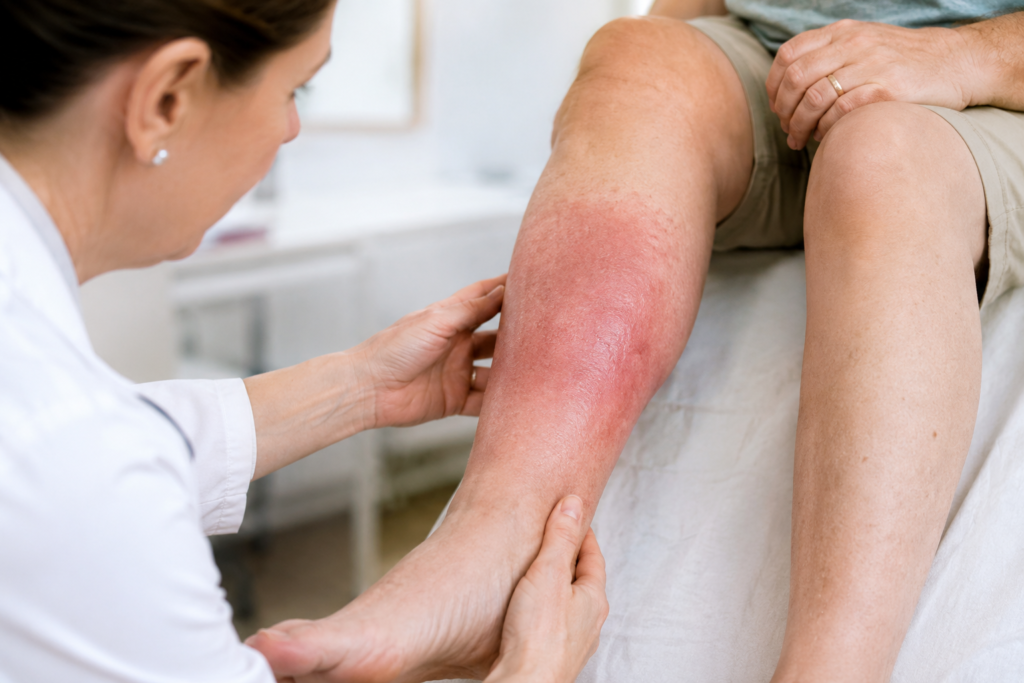
Have you noticed a painful, red, swollen area on your skin and worried about spreading it to your family or coworkers? That concern is completely understandable. Many people ask, Is Cellulitis Contagious? In most cases, cellulitis itself is not contagious and does not spread through casual contact.
Cellulitis is a serious bacterial skin infection that can worsen quickly. Increasing redness, swelling, warmth, fever, or red streaks on the skin may require urgent medical attention. Visit an ER in Pearland if symptoms are severe or rapidly worsening.
What Is Cellulitis?
Cellulitis is a bacterial skin infection that affects the deeper layers of the skin and underlying tissue. It often develops when bacteria enter through a cut, scrape, insect bite, or cracked skin. Common symptoms include redness, swelling, warmth, pain, and fever. Without prompt treatment, the infection can spread and cause serious complications.
A study published by the NIH found that cellulitis recurrence rates can reach as high as 49%, highlighting the importance of early diagnosis, treatment, and prevention of future infections.
Dangerous Cellulitis Symptoms
- Rapidly spreading redness or swelling.
- Severe pain or tenderness in the affected area.
- High fever or chills.
- Red streaks extending from the infected skin.
- Skin that becomes blistered, black, or discolored.
- Pus or drainage from the affected area.
- Dizziness, confusion, or extreme weakness.
- Difficulty breathing or a rapid heart rate.
If you or a loved one experiences any of these dangerous cellulitis symptoms, seek immediate medical care at an ER for severe infection. Prompt treatment can help prevent serious complications and the spread of infection.
Is Cellulitis Contagious?
Cellulitis is generally not contagious and does not spread from person to person through casual contact. It develops when bacteria enter the skin through cuts, wounds, or breaks in the skin barrier. In rare cases, the bacteria can spread if they come into direct contact with broken skin, which is why proper hygiene and wound care are important.
What Causes Cellulitis
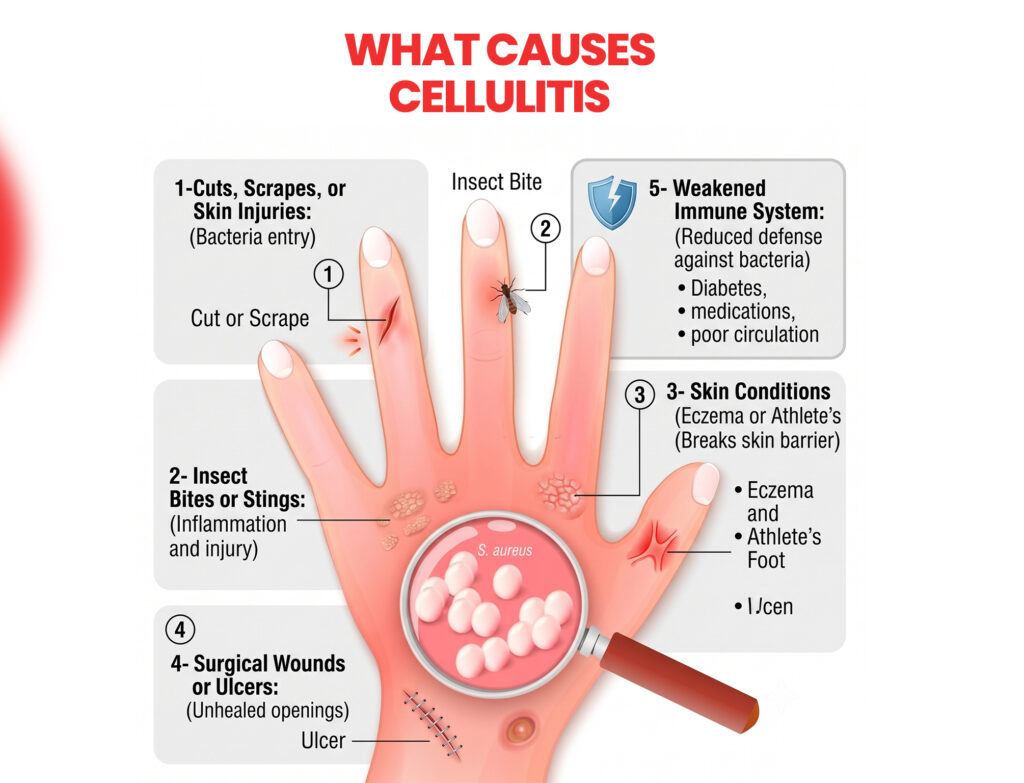
Cellulitis develops when bacteria enter the skin through breaks or weakened areas of the skin barrier. These entry points may be small or even unnoticed, but they allow infection to spread into deeper tissues. Certain health conditions and skin issues can increase the risk of developing cellulitis. Once the bacteria enter, the infection can progress quickly if not treated.
- Cuts, Scrapes, or Skin Injuries: Any break in the skin, even minor, can allow bacteria to enter and start an infection. Without proper cleaning, these wounds can quickly become a source of cellulitis.
- Insect Bites or Stings: Bites or stings can damage the skin surface and introduce bacteria. Scratching the area can further worsen the skin barrier and increase infection risk.
- Skin Conditions (Eczema or Athlete’s Foot): Conditions that cause cracked, dry, or inflamed skin create openings for bacteria. This makes infection more likely, especially if the skin is already irritated.
- Surgical Wounds or Ulcers: Open wounds from surgery or chronic skin ulcers can become infected if bacteria enter the area. Careful wound management is essential to reduce complications.
- Weakened Immune System: Conditions like diabetes or immune suppression reduce the body’s ability to fight bacteria. This makes it easier for infections like cellulitis to develop and spread.
When To Go To The ER
Cellulitis can become serious quickly, especially if the infection is spreading or affecting overall health. Immediate medical attention is important when symptoms worsen despite treatment or when signs of a more severe infection appear. Seeking emergency care early can help prevent complications such as bloodstream infection or tissue damage.
- Rapidly spreading redness or swelling.
- High fever or chills.
- Severe or worsening pain in the affected area.
- Red streaks moving away from the infection site.
- Blistering, skin darkening, or pus formation.
- Confusion, dizziness, or extreme weakness.
- Fast heart rate or difficulty breathing.
If you notice any of these symptoms, seek immediate care at an ER near me for prompt evaluation and treatment.
How To Treat Cellulitis
Cellulitis can be painful and concerning, but prompt treatment often helps prevent the infection from worsening. The best approach depends on the severity of the infection, the affected area, and a person’s overall health. Following medical advice and monitoring symptoms closely can support a safer recovery.
- Prescription Antibiotics: Antibiotics are the primary treatment for cellulitis because they target the bacterial infection causing the condition. Most doctors recommend taking the full prescribed course, even if symptoms begin to improve.
- Over-The-Counter Pain Relievers: Medications such as acetaminophen or ibuprofen may help reduce pain, swelling, and fever. Most doctors recommend using these medications as directed and only if they are appropriate for your health condition.
- Elevation Of The Affected Area: Keeping the infected arm, leg, or other affected area elevated can help reduce swelling and discomfort. This may also improve circulation and support healing.
- Wound Care And Cleaning: Any cuts, sores, or open wounds should be kept clean and properly covered. Good wound care helps prevent further bacterial growth and additional infection.
- Warm Compresses: Applying a warm, clean compress to the affected area may help relieve discomfort and improve blood flow. This can be used alongside medical treatment but should not replace it.
- IV Antibiotic Therapy: Severe cellulitis or infections that do not respond to oral antibiotics may require intravenous (IV) antibiotics. This treatment is often provided in a hospital or emergency care setting.
- Drainage Procedures: If an abscess or collection of pus develops, a healthcare provider may need to drain the area. Removing infected fluid can help the infection heal more effectively.
- Managing Underlying Conditions: Conditions such as diabetes, poor circulation, or chronic skin disorders can increase the risk of cellulitis. Treating these conditions may help improve recovery and reduce the risk of recurrence.
Cellulitis Treatment At Texas Emergency Care Center
Cellulitis can worsen quickly if treatment is delayed. Understanding “Is Cellulitis Contagious” is important, but so is knowing when to seek care. At Texas Emergency Care Center, patients can check ER wait times and receive treatment with little to no wait, helping ensure prompt evaluation and care for cellulitis symptoms.
Texas Emergency Care Center provides prompt assessment and treatment for cellulitis, including redness, swelling, pain, and fever. The focus is on controlling the infection, relieving symptoms, and preventing complications to support a safer recovery.
Key Takeaways
- Cellulitis is a bacterial skin infection that can spread quickly if left untreated.
- Cellulitis is generally not contagious and does not spread through casual contact.
- Common symptoms include redness, swelling, warmth, pain, tenderness, and fever.
- Cuts, wounds, insect bites, and skin conditions can increase the risk of cellulitis.
- Dangerous symptoms such as high fever, red streaks, severe pain, or rapidly spreading redness require immediate medical attention.
- Treatment often includes prescription antibiotics, wound care, and supportive measures to reduce pain and swelling.
- Early diagnosis and prompt treatment can help prevent serious complications and support a faster recovery.
- Texas Emergency Care Center provides urgent evaluation and treatment for cellulitis symptoms.
Frequently Asked Questions
What Does Cellulitis Look Like?
Cellulitis usually appears as a red, swollen, warm, and painful area of skin. The affected skin may feel tender, appear tight or shiny, and can sometimes develop blisters or red streaks.
How Do You Get Cellulitis?
Cellulitis occurs when bacteria enter the skin through a cut, scrape, insect bite, surgical wound, or other break in the skin. Once inside, the bacteria can spread into deeper tissues and cause infection.
What Causes Cellulitis In The Legs?
Cellulitis in the legs is commonly caused by bacteria entering through cracks in the skin, cuts, ulcers, athlete’s foot, or swelling-related skin damage. Poor circulation and diabetes can also increase the risk.