




Ear infections don’t just cause ear discomfort; they can trigger sharp, throbbing pain radiating to the jaw, along with swelling around the ear or jawline, difficulty chewing, stiffness, fever, or trouble opening the mouth. These symptoms happen because the infection can irritate nearby nerves, increase pressure in the middle or outer ear, and affect the temporomandibular joint (TMJ). In some cases, jaw pain signals that the infection is spreading or affecting deeper tissues, making prompt evaluation critical.
While many ear infections are mild and resolve with home care, persistent or worsening jaw pain can indicate serious complications, such as mastoiditis, abscess formation, or TMJ involvement. Recognizing these warning signs and understanding why ear infections cause jaw pain helps you act quickly, prevent complications, and seek urgent medical care when necessary. If symptoms become severe or do not improve, visiting an ER in Pearland can ensure timely evaluation and safe, effective treatment.
What Is an Ear Infection?
An ear infection (otitis) is inflammation or infection within parts of the ear, usually the middle ear (behind the eardrum) or outer ear (the ear canal). Middle ear infections are most common, especially in children, but adults can also develop them. Ear infections typically occur when fluid becomes trapped behind the eardrum, allowing bacteria or viruses to grow. This buildup increases pressure, irritates nerves, and causes pain.
Common ear infection symptoms:
- Ear pain or pressure
- Reduced hearing
- Popping or crackling sounds
- Fever
- Fluid drainage from the ear
In some cases, this pain can radiate to nearby structures, including the jaw. If the pain becomes severe, spreads, or is accompanied by fever or swelling, seeking care at an ER near me can help ensure prompt evaluation and treatment.
Why an Ear Infection Can Cause Jaw Pain
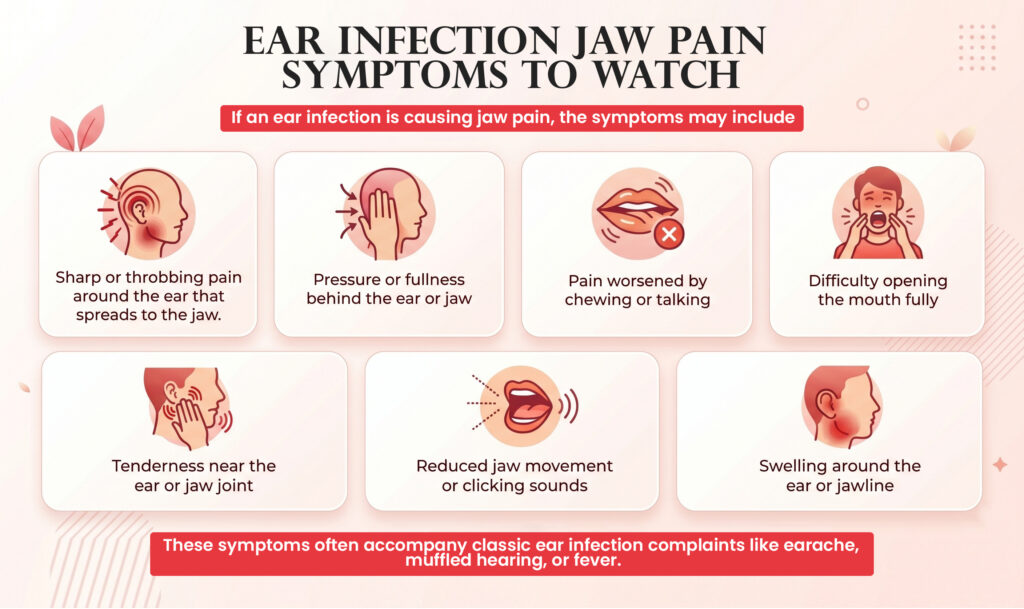
Although the ear and jaw are separate structures, they are closely connected, which is why ear infections often produce pain that radiates to the jaw. Understanding these links helps explain why jaw discomfort can occur even when the primary infection is in the ear.
1. Shared Nerve Pathways
The trigeminal nerve transmits sensation from the jaw, face, and ear region. When inflammation from an ear infection irritates this nerve, pain signals can radiate to the jaw, making it feel sore or achy even if the ear itself is the primary site of infection. This nerve connection explains why jaw discomfort often accompanies ear infections.
2. Proximity of Ear and Jaw Joints
The temporomandibular joint (TMJ) is located just next to the ear canal. Infection or inflammation in the ear can directly impact the TMJ and surrounding tissues, causing stiffness, tenderness, or difficulty opening the mouth. This close anatomical relationship makes jaw pain a common symptom during ear infections.
3. Ear Pressure and Fluid Buildup
When fluid accumulates behind the eardrum, it increases pressure in the middle ear. This pressure can push against nearby nerves and jaw joints, resulting in referred pain that may radiate across the face or jaw. The sensation can range from dull aching to sharp, throbbing discomfort.
4. Infection Spread or Complications
In more severe ear infections, inflammation can spread beyond the ear to adjacent areas, including the sinuses or soft tissues near the jaw. This extension of infection can intensify jaw pain, cause swelling, and increase the risk of complications, making timely medical evaluation crucial.
Together, these mechanisms explain why many people with an ear infection say their jaw hurts when their ear hurts, a frequent and distressing symptom.
Ear Infection Jaw Pain Symptoms to Watch
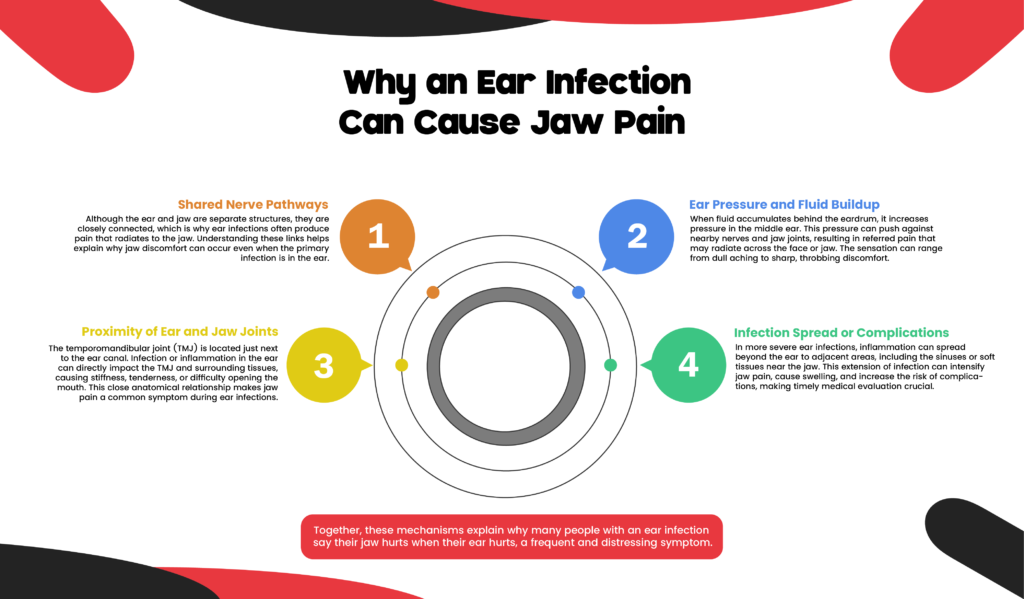
If an ear infection is causing jaw pain, the symptoms may include:
- Sharp or throbbing pain around the ear that spreads to the jaw
- Pressure or fullness behind the ear or jaw
- Pain worsened by chewing or talking
- Difficulty opening the mouth fully
- Tenderness near the ear or jaw joint
- Reduced jaw movement or clicking sounds
- Swelling around the ear or jawline
These symptoms often accompany classic ear infection complaints like earache, muffled hearing, or fever.
Signs Your Jaw Pain Is Caused by an Ear Infection
Jaw pain can have many causes, including tooth problems, TMJ disorders, sinus infections, or even heart issues. However, when jaw discomfort appears alongside ear pain, pressure, or other ear infection symptoms, the ear is often the source.
Watch for these key indicators:
- Pain on the same side as the ear infection, jaw discomfort usually mirrors the affected ear.
- Pain following an earache or sinus infection, sudden jaw soreness after ear symptoms, is a strong clue.
- Worsening pain with chewing, talking, or jaw movement, pressure from the ear or nearby joints can intensify discomfort.
- Other ear symptoms present drainage, muffled hearing, ringing, or fever, often accompany ear-related jaw pain.
If most of these apply, your jaw pain is likely linked to an ear infection, and monitoring symptoms closely or seeking medical evaluation is recommended to prevent complications. If symptoms worsen or don’t improve, visiting an ER for earache can help ensure timely diagnosis and appropriate treatment.
Home Remedies for Jaw Pain from an Ear Infection
For mild to moderate ear infection pain and jaw discomfort, some supportive care can help while you monitor symptoms:
Pain Relief
- Take over-the-counter pain relievers like acetaminophen or ibuprofen to reduce pain and inflammation.
- Apply warm compresses over the ear and jaw to soothe discomfort.
- Avoid activities that increase ear or jaw pressure, like excessive chewing or loud talking.
Rest and Hydration
- Rest to help your immune system fight the infection.
- Drink plenty of fluids to thin mucus and relieve ear pressure.
- Limit caffeine and alcohol, which can dehydrate and worsen inflammation.
Jaw Relaxation
- Avoid hard, chewy, or sticky foods that strain the jaw.
- Gently massage jaw muscles to reduce tension.
- Practice slow jaw stretches to relieve stiffness if movement is uncomfortable.
Steam or Humidification
- Inhale warm mist from a shower or humidifier to ease pressure.
- Use saline nasal sprays if congestion is contributing to ear pressure.
- Keep the room air moist, especially in dry environments, to prevent further irritation.
These steps can reduce discomfort, but they’re supportive, not a substitute for proper medical diagnosis and treatment.
Treatments for Ear Infection With Jaw Pain
If symptoms persist or worsen, medical care is important.
Medical Treatments:
- Antibiotics, if a bacterial infection is suspected
- Ear drops for outer ear infections
- Decongestants or nasal steroids for associated sinus congestion
- Referral to a specialist if pain persists or complications are suspected
Your healthcare provider can determine whether the infection is viral or bacterial and recommend appropriate therapy.
When to Go to the ER
Most ear infections improve within a few days with proper care, but jaw pain accompanied by certain warning signs may indicate a serious complication. Seek urgent medical evaluation or go to the ER if you notice any of the following:
- Severe or worsening jaw pain that limits opening the mouth or makes chewing/swallowing difficult
- High fever above 103°F (39.4°C) that doesn’t respond to medication
- Redness, swelling, or warmth around the ear, jaw, or face
- Sudden hearing loss or significant changes in hearing
- Ear drainage with foul odor
- Severe headache, stiff neck, confusion, dizziness, or neurological symptoms
- Facial weakness or drooping
- Signs of dehydration or inability to eat/drink
These symptoms may indicate complications such as mastoiditis, abscess formation, TMJ involvement, or spread of infection to surrounding tissues. Prompt evaluation and treatment, which may include IV antibiotics, imaging, or surgery, are critical to prevent serious consequences and long-term damage. For immediate care, consider visiting Texas Emergency Care Center for timely assessment and treatment.
Key Takeaways
- Yes, an ear infection can cause jaw pain due to shared nerves, pressure, and inflammation.
- Jaw discomfort often occurs with earache, pressure, or muffled hearing.
- Mild cases may improve with supportive care at home.
- Persistent or severe pain, swelling, high fever, hearing loss, or neurologic symptoms require prompt medical attention.
- Knowing when to go to the ER can prevent complications like abscess or mastoiditis.
Frequently Asked Questions
Can an ear infection cause jaw pain?
Yes, ear infections can irritate shared nerves between the ear and jaw, causing pain to spread. Increased pressure and inflammation in the ear can also affect nearby structures. This often results in discomfort that feels like it’s coming from the jaw.
How can I tell if jaw pain is from an ear infection?
Jaw pain linked to an ear infection is usually on the same side as the earache. It may worsen when chewing or opening your mouth. Other signs, like fever, ear drainage, or hearing changes, can help confirm the cause.
When should I seek medical care for ear and jaw pain?
Seek medical care if the pain is severe, persistent, or getting worse over time. Warning signs include high fever, swelling, hearing loss, or dizziness. These symptoms may indicate complications that need prompt treatment.