




An ear infection can feel sudden and distressing, especially when pain intensifies or a fever appears without warning. For many patients, it becomes difficult to understand whether the condition is mild or progressing into something more serious. While some ear infections resolve on their own, others can worsen quickly and lead to complications if not properly evaluated. Recognizing when symptoms are escalating is important for timely medical care and safer recovery.
At our ER for earache, patients receive rapid evaluation for severe ear pain, fever, pressure, and other worsening ear-related symptoms. Early assessment helps identify whether the infection is limited to the outer or middle ear or if it requires immediate treatment to prevent further complications.
What Causes an Ear Infection?
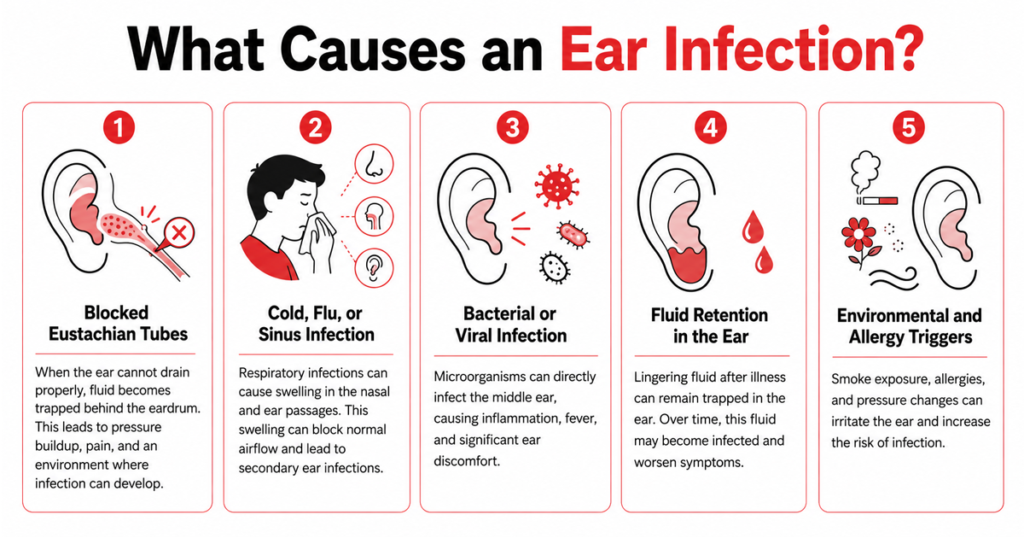
Ear infections can develop for several different reasons, and ear infections symptoms may appear suddenly or worsen over time. According to the National Institute on Deafness and Other Communication Disorders (NIDCD), NIH, ear infections often develop after a cold, flu, or respiratory illness when fluid becomes trapped in the middle ear, creating an environment where bacteria or viruses can grow.
- Blocked Eustachian Tubes: When the ear cannot drain properly, fluid becomes trapped behind the eardrum. This leads to pressure buildup, pain, and an environment where infection can develop.
- Cold, Flu, or Sinus Infection: Respiratory infections can cause swelling in the nasal and ear passages. This swelling can block normal airflow and lead to secondary ear infections.
- Bacterial or Viral Infection: Microorganisms can directly infect the middle ear, causing inflammation, fever, and significant ear discomfort.
- Fluid Retention in the Ear: Lingering fluid after illness can remain trapped in the ear. Over time, this fluid may become infected and worsen symptoms.
- Environmental and Allergy Triggers: Smoke exposure, allergies, and pressure changes can irritate the ear and increase the risk of infection.
Can an Ear Infection Cause a Fever?
Yes, ear infections can cause fever when the body responds to infection and inflammation inside the ear. Fever is more common in children but can also occur in adults depending on severity. In many cases, it reflects the immune system actively fighting infection, especially when swelling or pressure increases.
Dangerous Symptoms of Ear Infection Causing High Fever
- Severe or worsening ear pain
- Fever that continues rising or does not improve
- Swelling or redness around the ear
- Fluid, pus, or blood draining from the ear
- Trouble hearing or sudden hearing loss
- Extreme fatigue, confusion, or unusual drowsiness
- Stiff neck or severe headache
- Difficulty breathing or trouble staying awake
Is a Fever Common With an Ear Infection?
Yes, a mild fever is very common with ear infections. Fever is the body’s natural response to infection and inflammation, and it can appear in both children and adults depending on the severity of the condition. Many ear infections involve temperatures ranging from:
- Low-grade fever (99°F–100.4°F / 37.2°C–38°C): Often seen in early or mild ear infections. It reflects a basic immune response and may appear intermittently.
- Moderate fever (100.4°F–102°F / 38°C–38.9°C): More common in active infections with increasing inflammation, ear pressure, and pain.
How High Can Fever Go With an Ear Infection?
In most ear infection cases, fever stays within a mild to moderate range, but in some situations it can rise higher if the infection becomes more severe or the body is strongly reacting to it. While many people recover with manageable symptoms, rising or persistent fever can be a sign that the infection is worsening and may need medical attention.
- Low-grade fever (99°F–100.4°F / 37.2°C–38°C): Common in early-stage infections and mild inflammation.
- Moderate fever (100.4°F–102°F / 38°C–38.9°C): Indicates active infection with increasing immune response.
- High fever (102°F–104°F / 38.9°C–40°C): May signal a more serious infection that requires urgent medical evaluation.
Can You Have an Ear Infection Without a Fever?
Yes. Many ear infections occur without fever, especially in mild or early cases. Patients may only experience ear pressure, pain, muffled hearing, or a feeling of fullness. The absence of fever does not always mean the infection is minor, as symptoms can still worsen over time.
When to Go to the ER
Ear infections often start as a mild issue, but in some cases, symptoms can progress quickly and become more serious than expected. It can be difficult to judge at home when discomfort is still manageable and when it needs urgent medical attention. Seeking timely emergency care is important to prevent complications and to ensure the right treatment is started without delay.
- Severe or worsening ear pain: Pain that intensifies or does not improve may indicate a progressing infection.
- High or persistent fever: Ongoing fever may suggest a more serious infection requiring immediate care.
- Ear discharge (fluid, pus, or blood): May indicate advanced infection or eardrum involvement.
- Hearing loss or muffled hearing: Sudden changes in hearing should be evaluated promptly.
- Swelling around the ear: May suggest infection spreading beyond the middle ear.
- Dizziness or balance issues: Can indicate inner ear involvement and needs urgent evaluation.
If you or a loved one experiences any of these symptoms, don’t delay seeking care. Visit our ER in Pearland immediately.
Treatment for Ear Infection With Fever
Treatment for an ear infection with fever depends on the severity of the infection and the underlying cause, and it is important to get a proper medical evaluation before starting any medication. The main goal is to reduce infection, relieve pain, lower fever, and prevent complications.
- Pain and fever control (doctor-prescribed): Helps reduce discomfort and manage temperature safely.
- Antibiotics (if bacterial): Prescribed when infection is confirmed or strongly suspected.
- Medicated ear drops (if needed): Used to reduce inflammation and localized pain.
- Monitoring and evaluation: Doctors assess fluid buildup and infection severity.
- Supportive care: Rest, hydration, and follow-up help support recovery.
Ear Infection With High Fever Care at Texas Emergency Care Center
An ear infection with high fever may indicate a more advanced or severe infection that requires immediate evaluation. While mild cases may improve over time, worsening symptoms should not be ignored as they can lead to complications affecting hearing and overall health.
At Texas Emergency Care Center, patients receive prompt and compassionate emergency care for ear infections, including cases involving high fever. Our medical team evaluates symptoms, manages pain and fever, and determines the underlying cause to guide appropriate treatment. If symptoms are worsening or high fever develops, immediate emergency evaluation is strongly recommended.
Key Takeaways
- Ear infections can affect both children and adults.
- Fever is common but not always present.
- Ear infections can sometimes cause high fever in severe cases.
- Fever ranges from low-grade to high depending on severity.
- Infection may occur with or without fever.
- Causes include blocked drainage, respiratory illness, infection, and fluid buildup.
- Symptoms can worsen quickly without treatment.
- ER care is important for severe pain, high fever, or worsening symptoms.
- Treatment depends on cause and may include doctor-prescribed medications.
- Early evaluation helps prevent complications and supports faster recovery.
Frequently Asked Questions
Do Ear Infections Go Away On Their Own?
Yes, some mild ear infections may clear on their own as the immune system fights the infection. However, persistent or worsening symptoms may require medical treatment, especially if fever or pain increases.
Can an Ear Infection Cause a Sore Throat?
Yes, an ear infection can sometimes cause a sore throat. This happens because the ear, nose, and throat are connected through the Eustachian tube, allowing inflammation or infection to affect nearby areas.
Are Ear Infections Contagious?
Ear infections themselves are not contagious, but the colds, flu, or respiratory infections that often lead to them can spread from person to person.
Does an Ear Infection Cause Head Pain?
Yes, ear infections can cause head pain or headaches due to pressure buildup, inflammation, and referred pain from the infected ear area.
Can an Ear Infection Cause Jaw Pain?
Yes, jaw pain can occur with an ear infection because the ear and jaw share nearby nerves. Inflammation and pressure in the middle ear can sometimes radiate pain to the jaw area.