




The color of your mucus can reveal important clues about your respiratory health, but it does not automatically confirm a specific illness. If you’ve ever wondered “what does the color of your mucus mean?”, the answer depends on your immune response, symptom duration, and overall health. While certain shades may look alarming, many are part of the body’s normal defense process.
Mucus plays a protective role by trapping dust, bacteria, allergens, and other particles before they reach your lungs. Changes in color, thickness, or amount usually reflect inflammation or infection rather than severity. If symptoms persist, worsen, or feel severe, our ER in Pearland can evaluate the cause and guide appropriate treatment.
What Do The Different Snot Colors Mean?
Mucus color changes are influenced by hydration, immune activity, and environmental exposure. Clear discharge is often normal, while white, yellow, or green shades frequently appear during viral colds or sinus inflammation. Brown or black mucus is less common and may be linked to irritation or pollutants. Interpreting these changes alongside symptoms such as fever, facial pressure, or prolonged congestion provides more meaningful insight than color alone.
| Condition | Clear | White | Green Or Yellow | Red Or Pink | Brown Or Orange | Black |
| “Normal” Or Healthy | ✓ | |||||
| Allergic Sinusitis | ✓ | |||||
| Common Cold | ✓ | ✓ | ||||
| Fungal Infection | ✓ | |||||
| Injury Or Irritation | ✓ | ✓ | ||||
| Nonallergic Or Pregnancy Rhinitis | ✓ | ✓ | ||||
| Sinusitis | ✓ | ✓ | ||||
| Smoking/Drug Use | ✓ |
Different Mucus Colors And Their Causes
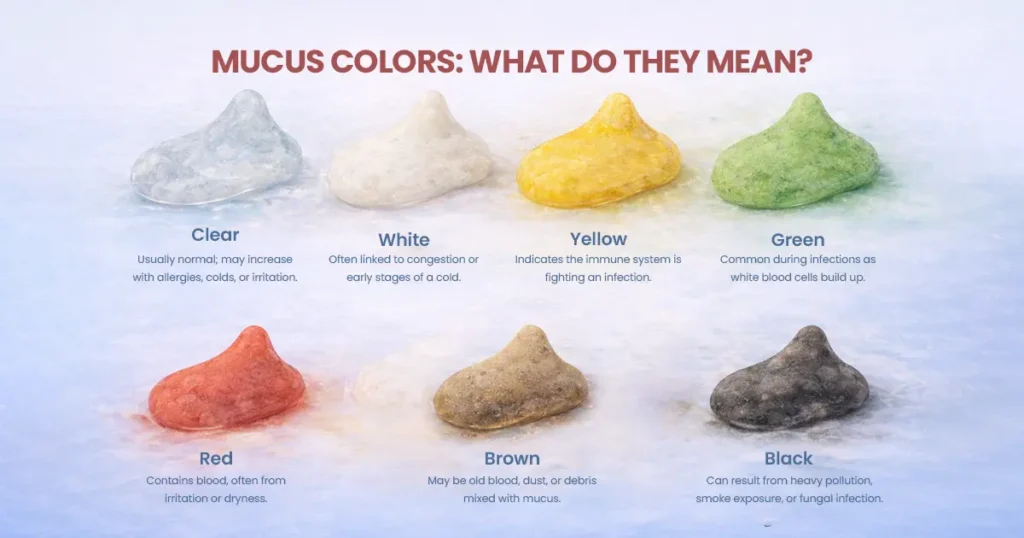
Mucus changes color when immune cells and enzymes accumulate in nasal secretions. As white blood cells respond to infection or irritation, they release substances that can tint mucus yellow or green. Environmental factors such as smoke or dust may darken it further. Although certain colors are associated with infections, duration and symptom severity remain more reliable indicators of bacterial involvement.
What Does Clear Mucus Mean
Clear mucus is usually healthy and expected. It consists mostly of water, antibodies, and proteins that trap debris and pathogens. Increased clear drainage often occurs with allergies, cold weather, spicy foods, or the early stages of viral illness. Persistent clear discharge without fever or facial pain typically suggests a noninfectious cause.
What Does White Mucus Mean
White mucus commonly appears when nasal tissues become inflamed and swollen. Swelling slows mucus flow, causing it to thicken and look cloudy. This is frequently seen in early colds or mild sinus congestion. Dehydration can also thicken secretions and make them appear whiter than usual. In some cases, white mucus may signal partial sinus blockage that prevents normal drainage.
What Does Yellow Mucus Mean
Yellow mucus indicates that your immune system is actively responding to inflammation or infection. As white blood cells break down and release enzymes, they give mucus a yellow tint. This color often develops during the middle phase of a viral cold and may improve without antibiotic treatment. If symptoms gradually improve over several days, the yellow color typically resolves on its own as inflammation decreases.
Does Yellow Mucus Mean Infection?
Yellow mucus can be seen during infections, but it does not automatically mean a bacterial infection is present. Viral respiratory illnesses commonly produce yellow discharge as immune cells accumulate. In one clinical study of adults with acute cough, yellow or green sputum was present in samples that correlated with bacterial infection, but only 12% of patients actually had culture-confirmed bacteria, indicating color alone isn’t definitive.
Also Read: Why Is My Mucus Yellow
What Does Red Mucus Mean
Red mucus usually means there is blood mixed with the mucus. It often happens when tiny blood vessels in the nose break due to irritation or dryness. This can be caused by frequent nose blowing, allergies, or a cold. If it happens often or with heavy bleeding, medical advice may be needed.
What Does Green Mucus Mean
Green mucus develops when higher concentrations of immune cells and enzymes build up in nasal secretions. It commonly appears during viral colds and sinus inflammation. While green discharge is often associated with bacterial infections, many viral illnesses can also produce this color. Clinical context is more important than color in determining treatment.
Does Green Mucus Mean Infection
Green mucus may be linked to infection, but it does not automatically indicate that antibiotics are necessary. The green color results from enzymes released by white blood cells responding to inflammation. Viral infections frequently produce green discharge, especially at peak symptom stages. Bacterial sinus infections are more likely when green mucus is accompanied by high fever, severe facial pain, or symptoms lasting longer than 10–14 days.
What Does Brown Mucus Mean
Brown mucus is typically caused by dried or old blood mixing with nasal secretions. It may also result from inhaling dust, pollution, or smoke. Minor irritation from dry air or frequent nose blowing can contribute to this discoloration. Occasional brown mucus is usually harmless, but ongoing symptoms should be evaluated.
What Does Brown Mucus Indicate
- Old Blood: Dried blood from minor nasal irritation or recent nosebleeds can darken mucus. This is generally temporary and resolves as tissues heal.
- Environmental Exposure: Dust, pollution, or smoke particles can discolor mucus. Limiting exposure often improves symptoms.
- Chronic Inflammation: Persistent sinus irritation may produce darker discharge and should be assessed if accompanied by pain or congestion.
What Does Black Mucus Mean
Black mucus is uncommon and may be associated with heavy smoke exposure, air pollution, or certain inhaled substances. In rare cases, particularly in individuals with weakened immune systems, it may signal a serious fungal infection. Because this color is not typical, especially without clear environmental exposure, a medical evaluation is recommended.
When To Seek Emergency Care?
Most mucus color changes resolve on their own during mild viral illnesses or allergy flare-ups. However, certain symptoms may indicate a more serious condition requiring prompt medical attention.
- High fever lasting more than three days.
- Severe facial pain or swelling.
- Symptoms persisting beyond 10–14 days without improvement.
- Vision changes or a severe headache.
- Black mucus without known environmental exposure.
If you experience these symptoms along with concerning mucus changes, contact the Texas Emergency Care Center for immediate evaluation and treatment.
Care For Mucus Concerns At Texas Emergency Care Center
Changes in the color of your mucus can sometimes signal infections or other respiratory issues. Understanding “what does the color of your mucus mean” can help you monitor your symptoms, but it’s important to remember that color alone does not always indicate the severity of the condition. Persistent, worsening, or unusual mucus should prompt professional evaluation.
At Texas Emergency Care Center, our skilled medical team can assess your symptoms quickly and provide targeted treatment. Whether it’s a severe sinus infection, allergy flare-up, or another respiratory concern, early evaluation ensures safer management, faster relief, and peace of mind. Don’t wait to seek care if you notice significant changes in your mucus or experience additional symptoms like fever or shortness of breath.