




Pregnancy nausea, commonly known as morning sickness, is far more than a mild inconvenience. For many, it brings relentless queasiness, repeated vomiting, loss of appetite, dizziness, and an inability to keep food or fluids down. These symptoms can quickly take over daily life, leaving you exhausted, dehydrated, and struggling to function. Driven by rapid hormonal changes in early pregnancy, this condition doesn’t just affect the stomach—it impacts the body’s overall balance and well-being, sometimes making even simple tasks feel overwhelming.
While some women find relief as pregnancy progresses, others experience symptoms that linger, intensify, or become unpredictable. What may start as occasional nausea can escalate into persistent vomiting or dehydration, signaling a more serious concern. Recognizing when symptoms go beyond “normal” is critical, especially if you cannot keep fluids down or feel weak and faint. In such cases, seeking prompt medical care at an ER in Pearland is essential to protect both maternal health and the developing pregnancy.
What Is Pregnancy Nausea?
Pregnancy nausea refers to the feeling of queasiness or urge to vomit that occurs due to hormonal and physical changes in early pregnancy. It is commonly referred to as morning sickness, although it can occur at any time of the day. Common features of pregnancy nausea include:
- Queasiness or stomach discomfort
- Vomiting or retching
- Sensitivity to smells
- Loss of appetite
- Increased salivation
In most cases, nausea is a normal part of early pregnancy and is not harmful. However, monitoring the severity and duration is important to ensure it does not lead to complications.
Pregnancy Nausea Duration by Severity
Pregnancy nausea typically starts around weeks 4–6 of pregnancy and lasts until about weeks 12–14 for most women. For many individuals, symptoms improve at the end of the first trimester. However, some may continue to experience nausea during pregnancy into the second trimester, and in a smaller number of cases, it can persist longer. In general:
- Mild pregnancy nausea: lasts a few weeks to the end of the first trimester
- Moderate nausea: may continue into weeks 14–16
- Severe cases: can last longer and may require medical treatment
If nausea is persistent, worsening, or accompanied by dehydration, weight loss, or inability to keep fluids down, it may indicate a more serious condition such as hyperemesis gravidarum, which requires medical care. In such cases, searching for an ER near me can help you get prompt evaluation and treatment.
Timeline of Pregnancy Nausea (Week by Week)
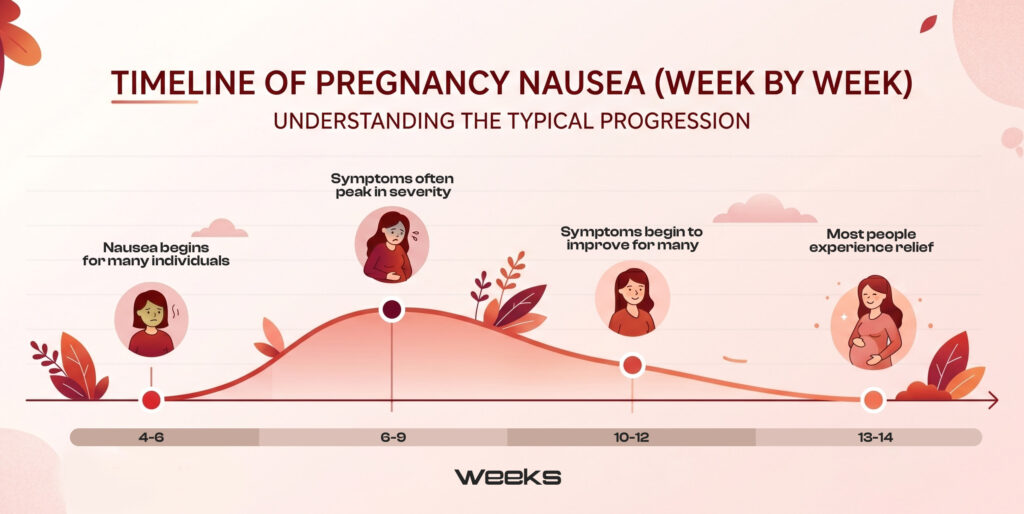
Understanding the typical progression of how long does nausea in pregnancy last can help set expectations:
- Weeks 4–6: Nausea begins for many individuals
- Weeks 6–9: Symptoms often peak in severity
- Weeks 10–12: Symptoms begin to improve for many
- Weeks 13–14: Most people experience relief
- Second trimester: Nausea usually resolves, though some may continue experiencing mild symptoms
If nausea persists beyond the first trimester, it is still often normal, but should be evaluated if severe or disruptive.
Causes of Nausea During Pregnancy
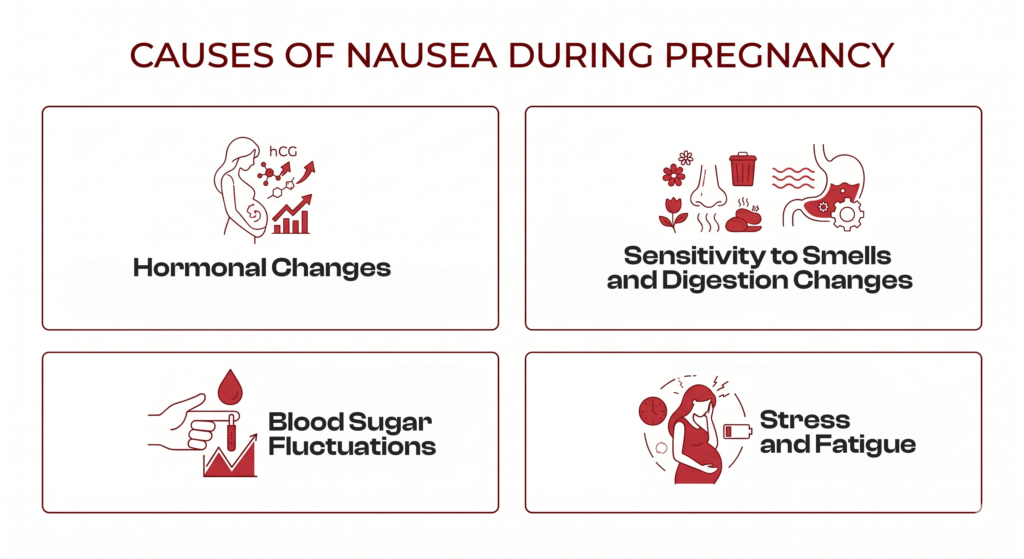
Nausea during pregnancy is mainly caused by hormonal changes, especially rising hCG and estrogen levels. However, factors like sensitivity, digestion changes, and individual health can influence its severity and duration.
- Hormonal Changes: Rising levels of human chorionic gonadotropin (hCG) and estrogen are strongly linked to nausea. These hormones increase rapidly in early pregnancy and gradually stabilize later on.
- Sensitivity to Smells and Digestion Changes: Pregnancy can heighten the sense of smell and slow digestion, both of which can trigger nausea.
- Blood Sugar Fluctuations: Low blood sugar levels may worsen nausea, especially if meals are skipped or delayed.
- Stress and Fatigue: Physical and emotional stress can make symptoms more intense.
Is It Normal to Have Nausea Throughout Pregnancy?
While most cases of nausea in pregnancy resolve after the first trimester, some individuals may continue experiencing symptoms into later stages.
Persistent nausea may be influenced by:
- Hormonal sensitivity
- Multiple pregnancies (twins or more)
- Pre-existing digestive conditions
- Individual body response to pregnancy hormones
However, nausea that continues throughout pregnancy is not always harmless, especially if accompanied by dehydration, weight loss, or inability to eat or drink properly.
When Pregnancy Nausea Becomes a Concern
Although pregnancy nausea is common, certain symptoms may indicate a more serious issue that requires medical evaluation.
Warning signs include:
- Inability to keep fluids down
- Severe or persistent vomiting
- Signs of dehydration (dark urine, dizziness, dry mouth)
- Weight loss during pregnancy
- Vomiting multiple times per day
These symptoms may suggest hyperemesis gravidarum, a severe form of pregnancy nausea that requires treatment to prevent complications.
Nausea Medicine for Pregnancy
Many people seek nausea medicine for pregnancy to manage symptoms when lifestyle changes are not enough. Treatment options depend on severity and should always be guided by a healthcare provider. Common treatment options may include:
- Many people seek nausea medicine for pregnancy when lifestyle changes are not enough, but treatment should always be guided by a healthcare provider.
- Vitamin B6 supplements are commonly recommended to help reduce nausea symptoms.
- Doxylamine is often used in combination with Vitamin B6 for better symptom control.
- Doctors may prescribe anti-nausea medications for moderate to severe cases.
- Not all medications are safe during pregnancy, so professional guidance is essential.
- Always consult a healthcare provider before taking any nausea medicine.
- Medication may be necessary if nausea affects hydration, nutrition, or daily functioning.
Home Remedies for Pregnancy Nausea
Mild cases of nausea during pregnancy can often be managed with supportive care:
- Eat small, frequent meals instead of large ones
- Stay hydrated with water, electrolyte drinks, or ginger tea
- Avoid strong smells or triggers
- Eat bland foods like crackers, toast, or rice
- Rest and avoid fatigue
- Try ginger or vitamin B6 (with medical guidance)
These strategies may reduce discomfort but may not be sufficient for severe cases.
How Long Does Nausea in Pregnancy Last in Severe Cases?
In severe cases, nausea may last longer than the typical first-trimester timeline. Conditions like hyperemesis gravidarum can extend symptoms into the second trimester or beyond. In such cases:
- Symptoms may persist throughout pregnancy
- Medical intervention is often required
- IV fluids, medications, and monitoring may be necessary
If nausea is severe and prolonged, it should not be ignored.
When to Go to the ER for Pregnancy Nausea
While mild nausea is normal, certain symptoms indicate a medical emergency. Pregnant individuals should seek immediate care if experiencing severe or persistent nausea and should visit an ER for nausea if symptoms worsen or do not improve.
- Inability to keep any food or fluids down
- Signs of dehydration (dizziness, fainting, minimal urination)
- Severe vomiting lasting more than 24 hours
- Rapid heartbeat or weakness
- Confusion or difficulty concentrating
- Severe abdominal pain along with nausea
- Vomiting blood or dark material
These symptoms may indicate dehydration, electrolyte imbalance, or other complications requiring urgent treatment. At an emergency center, patients may receive:
- IV fluids for hydration
- Anti-nausea medications
- Blood tests and monitoring
- Evaluation for underlying complications
Prompt care can prevent serious risks to both the mother and baby.
Diagnosis and Medical Evaluation
When nausea becomes severe, healthcare providers may perform evaluations to determine the cause and severity.
Common assessments include:
- Medical history and symptom review
- Blood tests to check hydration and electrolyte levels
- Urine tests for dehydration or ketones
- Physical examination
Early diagnosis ensures appropriate treatment and reduces complications.
24/7 Emergency Care for Pregnancy Nausea
When pregnancy nausea becomes severe, persistent, or leads to dehydration, timely medical attention is essential. At Texas Emergency Care Center, patients receive prompt, expert evaluation and treatment in a fully equipped emergency setting designed to manage urgent pregnancy-related symptoms. Care begins with rapid assessment by experienced providers, followed by IV fluids to restore hydration and balance, along with safe anti-nausea medications to relieve symptoms. Diagnostic testing may also be performed to identify any underlying complications.
Whether symptoms are caused by severe morning sickness or conditions like hyperemesis gravidarum, patients are closely monitored to ensure stability and safety. The focus is on quickly stabilizing the patient, relieving discomfort, and preventing further complications to protect both the mother and the developing baby.
Key Takeaways
- Pregnancy nausea typically begins around weeks 4–6 and improves by weeks 12–14
- Most cases are mild and resolve naturally
- Some individuals experience nausea beyond the first trimester
- Severe or persistent nausea may require nausea medicine for pregnancy and medical care
- Warning signs like dehydration, inability to eat or drink, or continuous vomiting require urgent evaluation
- Knowing how long nausea in pregnancy lasts helps distinguish normal symptoms from potential emergencies
Frequently Asked Questions
When does nausea start in pregnancy?
Nausea usually starts around weeks 4–6 of pregnancy as hormone levels increase. Some individuals may notice symptoms a bit earlier or later, depending on their body’s response. The timing and intensity can also vary based on individual sensitivity and overall health.
When does nausea stop in pregnancy?
For most people, nausea eases by weeks 12–14 as pregnancy progresses. In some cases, symptoms may continue into the second trimester or, less commonly, persist longer. If nausea remains severe or does not improve, medical evaluation may be recommended to rule out complications.
How to control nausea in pregnancy?
Nausea can be managed by eating small, frequent meals, staying hydrated, avoiding triggers, resting well, and using doctor-recommended options such as vitamin B6 or other safe treatments.